
Why Your Cleaning Wipes Might Be Hurting Your Family (And What to Use Instead)
The best non toxic cleaning wipes for most families are plant-based, EWG Verified, and free from synthetic fragrances, chlorine, and harsh chemicals — here are the top picks at a glance:
| Wipe | Best For | Key Certification |
|---|---|---|
| Premium Plant-Based Wipes | Babies, sensitive skin, all surfaces | EWG Verified, NEA Recognized |
| Safer Choice Cleaning Wipes | Kitchen & food surfaces | EPA Safer Choice |
| Biom Standard All Purpose Wipes | Everyday multi-surface use | Plastic Neutral, Biodegradable |
| USDA Biobased Multi-Surface Wipes | Streak-free general cleaning | USDA 97% Biobased, PETA |
| Ode to Clean Wipes | Germ-killing, kid-safe surfaces | Plant-based Bioperoxide |
Most of us reach for a cleaning wipe without thinking twice. But what’s actually in that wipe matters more than the label suggests.
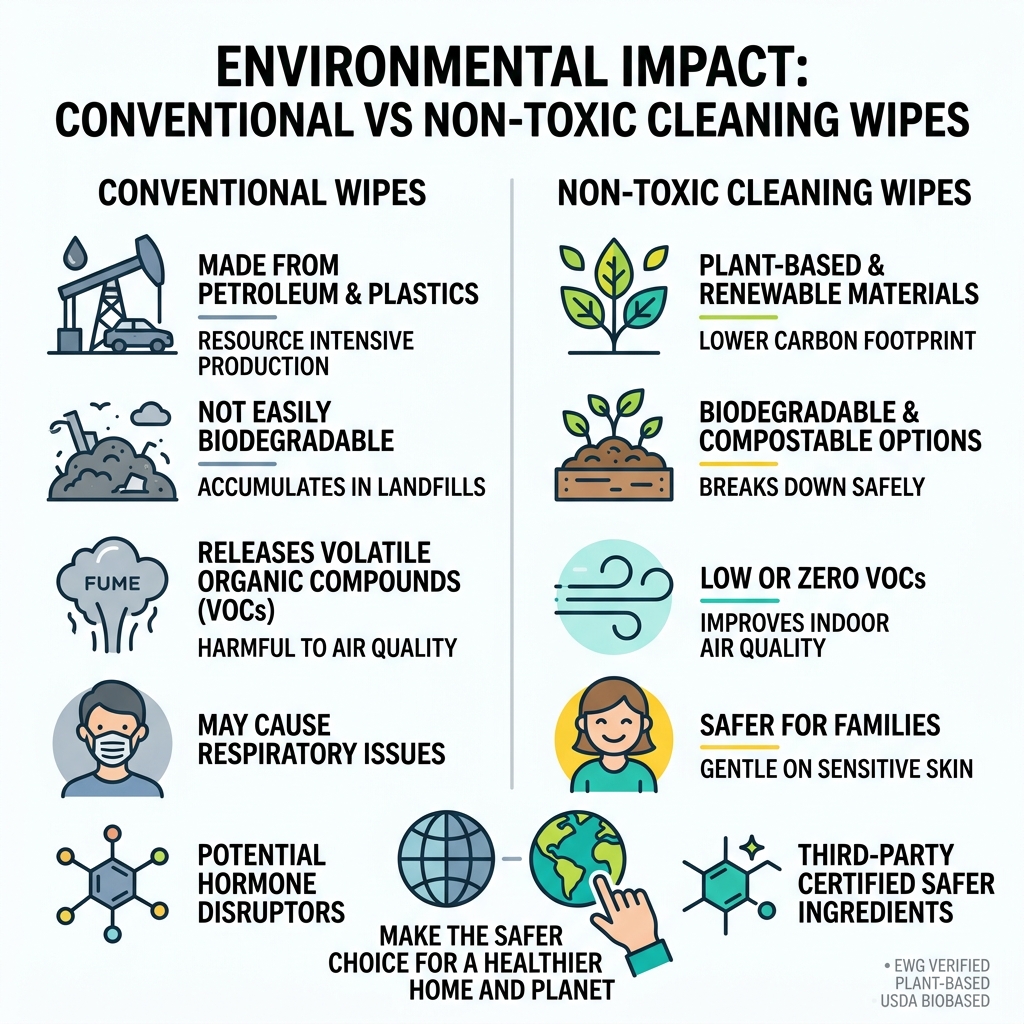
Indoor air can be 2 to 5 times more polluted than outdoor air — and common cleaning products are a major reason why. The volatile organic compounds (VOCs) they release linger on surfaces, float into the air you breathe, and can disrupt hormones even in tiny amounts.
Conventional wipes rely heavily on petroleum-based ingredients. To put it in perspective: the petroleum used in those wipes every year is enough to drive from Earth to the Moon and back 18,000 times.
For parents with young children, this is especially concerning. Kids crawl on floors, touch everything, and put their hands in their mouths. Their developing bodies are far more vulnerable to trace chemicals than adults.
The good news? Safer options exist — and they actually work.
Why Switch to the Best Non Toxic Cleaning Wipes?
We spend a staggering amount of time indoors—historically around 90%, but in recent years, that figure has climbed closer to 100% for many of us. This makes our indoor air quality a critical health factor. When we use conventional wipes, we aren’t just cleaning a surface; we are releasing a cocktail of Volatile Organic Compounds (VOCs) into our living spaces. In fact, household VOCs from cleaning products now rival car fumes as a primary source of air pollution.
Switching to the best non toxic cleaning wipes isn’t just about being “eco-friendly”; it’s about respiratory health and endocrine safety. Many traditional cleaners contain hormone disruptors that can interfere with the body’s natural systems even at low concentrations—likened by experts to a single drop in an Olympic-sized swimming pool.
Children are particularly vulnerable. Because they are smaller, breathe more rapidly, and spend time crawling on the floor, they absorb higher concentrations of these residues. Using safe natural cleaners for children ensures that their play areas remain a sanctuary, not a source of chemical exposure.
Our furry friends are also at risk. Pets lick their paws and groom themselves, meaning whatever you use to clean the floor ends up in their systems. By choosing safe cleaners for pets at home, we protect the members of our family who can’t speak up for themselves.
Key Ingredients to Look For (and Avoid)
When we go shopping for the best non toxic cleaning wipes, reading the label is our first line of defense. However, marketing “hype” can be confusing. We recommend looking for transparency and ingredients backed by science.
The “Good” List:
- Citric Acid: A natural disinfectant derived from citrus fruits that is tough on bacteria but gentle on skin.
- Bioperoxide: A plant-based natural disinfectant that effectively kills germs like salmonella and E. coli without toxic fumes.
- Hypochlorous Acid: This is the same substance our white blood cells produce to fight infection. It’s incredibly effective yet safe enough to use around food. You can learn more about it from the EPA’s Safer Chemical Ingredients List.
- Essential Oils: Ingredients like lemongrass, tea tree, and lavender provide natural antimicrobial properties and a pleasant scent without synthetic “fragrance” loops.
- Aloe Vera: Found in high-quality wipes to protect the skin of the person doing the cleaning.
The “Avoid” List:
- Quats (Quaternary Ammonium Compounds): These are common in disinfecting wipes but are known respiratory irritants and have been linked to reproductive issues.
- Phthalates and Synthetic Fragrances: Often hidden under the word “fragrance,” these are notorious hormone disruptors.
- Chlorine and Bleach: These can create hazardous gases when mixed with other cleaners and are harsh on the lungs.
- Parabens: Used as preservatives, these can mimic estrogen in the body.
For families, prioritizing plant-based cleaning products for families ensures that the home remains a healthy environment for growth and development.
7 Best Natural Antibacterial Wipes for a Healthier Home
Finding a wipe that balances efficacy with safety is the “holy grail” of green cleaning. We’ve rounded up the top performers by category, focusing on formulas and materials associated with trusted third-party certifications like EWG Verified, EPA Safer Choice, and FSC (Forest Stewardship Council).
1. Highly-Rated Plant-Based Wipes
Premium plant-based wipes are a gold standard for transparency. The strongest options are made with over 99% water and only a short list of transparent, toxicologist-audited ingredients. Look for wipes that are EWG Verified and have received the National Eczema Association (NEA) Seal of Acceptance. Many are plant-based and compostable, disintegrating in about eight weeks under home composting conditions.
2. EPA Safer Choice Certified Wipes
Many safer formulas now meet the U.S. EPA Safer Choice standards. This means every ingredient has been reviewed for human health and environmental safety. They are typically bleach-free, ammonia-free, and suitable for use around kids, pets, and food surfaces without needing a rinse afterward, depending on label directions.
3. Sustainable Refillable Wipes
If you’re tired of plastic waste, refillable wipe systems can be a smart alternative. Their reusable dispensers are designed for long-term use, and the wipes themselves are often made from sustainably grown wood fiber. Some options use substantially less plastic in their packaging than leading conventional brands and may be certified plastic neutral. These everyday wipes are often biodegradable under the right conditions.
4. High Biobased Content Multi-Surface Wipes
Top-tier multi-surface cleaner wipes can feature a high USDA-certified biobased content. Many use a plant-based cloth made from FSC-certified wood pulp and a streak-free formula powered by ingredients like lemongrass oil and citric acid. Cruelty-free and vegan certifications are also common in this category.
5. Gentle Plant-Based Wipes for Sensitive Surfaces
For the most delicate jobs, hypoallergenic unscented wipes are hard to beat. Because they are often alcohol-free and dermatologist-tested, they can be useful for sensitive surfaces such as highchair trays, toys, and other everyday messes where a gentler formula is preferred.
6. Versatile Microplastic-Free Wipes
Most conventional wipes actually contain microplastics, meaning they never truly break down. Microplastic-free wipes avoid that problem. Some are infused with aloe vera and small amounts of essential oils while still being suitable for multi-surface jobs like kitchen grease and bathroom grime.
7. DIY Solutions: Crafting the Best Non Toxic Cleaning Wipes Yourself
If you want total control over your ingredients and less waste, making your own is a fantastic option. By using white vinegar, distilled water, and a few drops of antimicrobial essential oils like lemon or eucalyptus, you can create a simple cleaning solution. Soak reusable cotton cloths in this mixture and store them in a glass jar. This is not only cost-effective but also eliminates single-use waste entirely. You can up your cleanliness game with homemade eco-friendly surface wipes to ensure your home stays sparkling without the chemical hangover.
How to Use Non-Toxic Wipes Effectively
To get the most out of the best non toxic cleaning wipes, you have to follow the “rules of the road.” Natural cleaners often require a little more patience than their harsh chemical counterparts.
The 10-Minute Rule
Many people wipe a surface and immediately dry it off. However, to actually disinfect (kill viruses and bacteria), the surface must remain wet for a specific “contact time.” For many natural disinfectants, the EPA recommends a 10-minute contact time to ensure maximum efficacy against harder-to-kill pathogens.
Surface Compatibility
While most non-toxic wipes are safe for any surface that can get wet, always check for specific needs. For instance, citric-acid-based wipes are great for bathrooms but should be used cautiously on natural stone like marble. If you are dealing with tougher issues, you might need specialized non-toxic mold and mildew cleaners to get the job done right.
Proper Disposal and Composting
Just because a wipe says “compostable” doesn’t mean you should toss it in your backyard bin after cleaning up raw chicken or pet waste.
- Home Composting: Only compost wipes used for “clean” messes like dust or spilled juice.
- The 10% Rule: Wipes should never make up more than 10% of your total compost pile to ensure they break down properly.
- Municipal Facilities: Check if your local city accepts compostable wipes, as they often have higher-heat industrial processes that break down plant fibers faster.
| Feature | Conventional Wipes | Non-Toxic Wipes |
|---|---|---|
| Base Material | Petroleum/Plastic | Plant-based/Wood Fiber |
| Disinfectant | Quats/Bleach | Citric Acid/Bioperoxide |
| Biodegradability | Hundreds of years | 2-8 weeks |
| Indoor Air Impact | High VOCs | Low/No VOCs |
Frequently Asked Questions about Non-Toxic Cleaning
Do non-toxic wipes actually kill germs and viruses?
Yes! Modern green chemistry has come a long way. Ingredients like Bioperoxide and citric acid are highly effective against common household germs like Salmonella, E. coli, and the flu virus. For those concerned about specific viruses, look for products on the EPA List N, which includes natural options like thymol-based cleaners and hypochlorous acid formulations.
Are these wipes safe for use around children and pets?
Generally, yes. Because the best non toxic cleaning wipes avoid volatile chemicals and residues that cause respiratory distress or skin irritation, they are much safer. However, we always recommend keeping any cleaning product out of reach of children and checking for safe cleaners for pets at home to ensure specific ingredients like certain essential oils (which can be sensitive for cats) are used in safe concentrations.
Can I compost all “natural” cleaning wipes?
Not necessarily. A wipe must be specifically labeled as “compostable” and “plastic-free.” Many “natural” wipes still use a synthetic mesh to keep the wipe from tearing. Look for the FSC-certified wood pulp or 100% plant-based labels. Also, a wipe used with a toxic chemical cleaner is no longer compostable, even if the cloth itself is plant-based.
Conclusion
At Delícias Saborosas, we believe that a clean home shouldn’t come at the cost of your health or the planet’s future. By choosing the best non toxic cleaning wipes, you are making a progressive choice for a more sustainable lifestyle. Whether you are wiping down a highchair or sanitizing your kitchen counters, these plant-based alternatives provide the peace of mind that your family is safe from harmful VOCs and hormone disruptors.
Ready to take the next step in your eco-friendly journey? Explore our guide on natural disinfectants for home to find more ways to keep your space sparkling and safe. Together, we can preserve the planet, one wipe at a time.
