
Why Your Windows Deserve a Zero Waste Cleaner
Zero waste window cleaner options are a simple swap that can make a real difference for your family and the planet. Here are the best options available right now:
- Tablet-based (e.g., Blueland): Drop a tablet into a reusable bottle, add water, done. Saves up to 5 plastic containers per year.
- Dissolvable strips (e.g., Nantucket Spider): 2 strips + a 16 oz bottle = one full cleaner. One box replaces 4 single-use plastic bottles.
- Liquid refill bottles (e.g., Earth Friendly Products): Ready-to-use, vinegar-based, EPA Safer Choice certified.
- DIY recipes: Mix white vinegar, water, and a few drops of castile soap. Costs pennies per batch.
Most of us don’t think twice about grabbing a bottle of conventional window cleaner. But that bottle likely ends up in a landfill. Only 5 to 6% of plastic is actually recycled — down from 9% just a few years ago. The rest? Landfill, ocean, or incineration.
And it’s not just the plastic. Traditional glass cleaners often contain ammonia, synthetic fragrances, and harsh solvents that can trigger allergies, irritate airways, and pollute waterways. Not exactly what you want sprayed around your kids.
The good news? Switching to a zero waste option doesn’t mean sacrificing clean, streak-free windows. It just means choosing smarter — for your home and for the environment.
Why Switch to a Zero Waste Window Cleaner?
Making the switch to a zero waste window cleaner isn’t just a trend; it’s a necessary step toward reducing our collective footprint. Every time we finish a bottle of Windex and toss it in the bin, we’re contributing to a massive global waste problem. When we choose environmentally-friendly-window-cleaners, we are voting for a future where cleaning doesn’t come at the cost of the Earth.
The statistics are eye-opening. Using a refillable tablet system can save approximately 1.003 pounds of plastic per year. Furthermore, these concentrated solutions result in 91% less emissions during transport because we aren’t shipping heavy bottles of water across the country. Considering that only 5-6% of plastic is actually recycled, the “away” in “throwing it away” simply doesn’t exist.
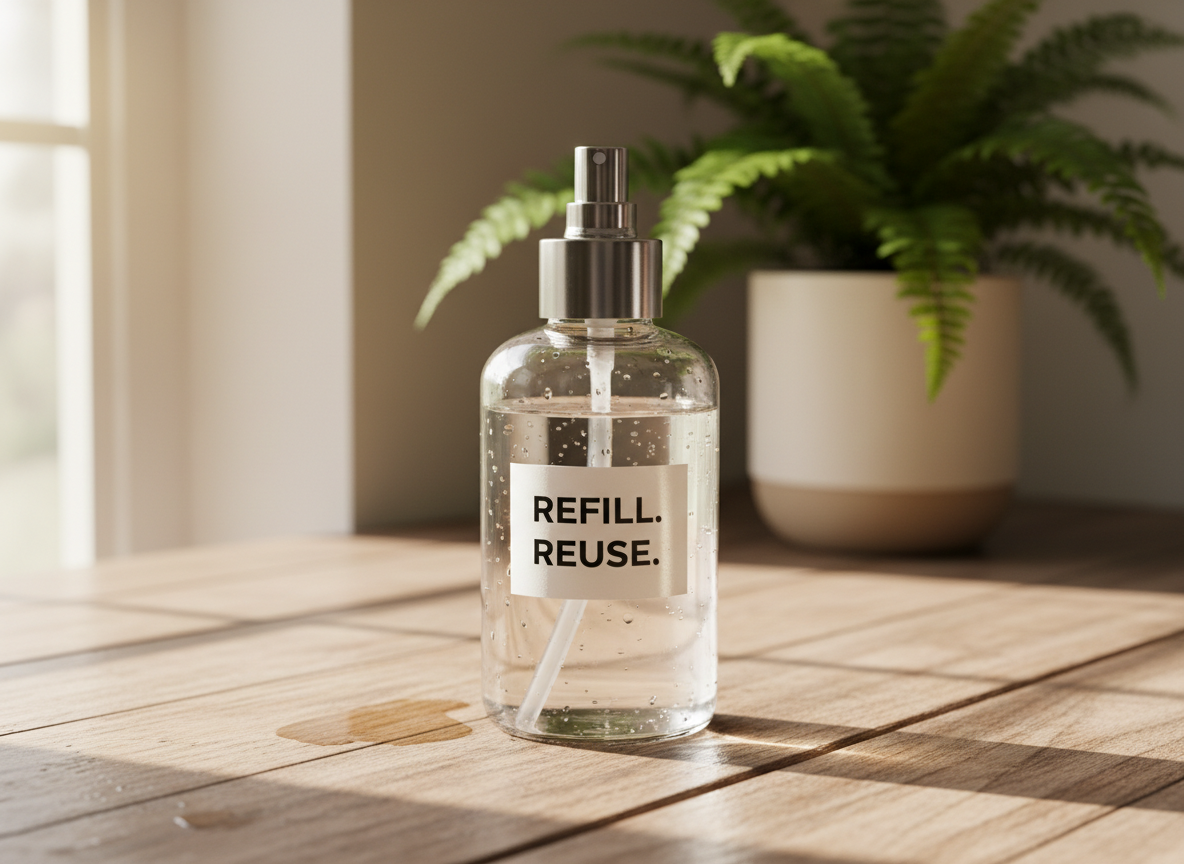
The Environmental Impact of Traditional Glass Cleaners
Traditional glass cleaners are often a cocktail of chemicals that do more than just remove fingerprints. One of the biggest offenders is ammonia. While it’s great at cutting through grease, ammonia is composed of about 82% nitrogen. When this washes down our drains, it eventually reaches our waterways, fueling algae overgrowth. This leads to “dead zones” where oxygen levels are so low that aquatic life cannot survive.
Beyond ammonia, here are other common ingredients to watch out for:
- Synthetic Fragrances: These can contain up to 4,000 separate ingredients, many of which are linked to respiratory irritation and hormone disruption.
- Phthalates: Often hidden in those “fresh scents,” these are known endocrine disruptors.
- Chlorine Bleach: Harsh on the lungs and toxic to water-dwelling organisms.
- Synthetic Dyes: Added purely for aesthetics (that classic blue color), these provide no cleaning benefit and add more chemicals to the environment.
Certifications to Look For in Sustainable Sprays
When you’re shopping for a zero waste window cleaner, the labels can be confusing. To ensure you’re getting a product that truly lives up to its “green” claims, look for these gold-standard certifications:
- EPA Safer Choice: This means every ingredient has been vetted by the Environmental Protection Agency to ensure it meets strict human health and environmental criteria.
- Cradle to Cradle: This assesses products across five categories of human and environmental health, focusing on the “circular economy” (making sure materials can be reused or composted).
- Leaping Bunny: The international gold standard for non-animal tested products.
- B Corp Status: This indicates the entire company meets high standards of verified social and environmental performance, transparency, and accountability.
Comparing Concentrates: Tablets, Strips, and Liquid Refills
The “future” of cleaning is concentrated. Why? Because most traditional cleaners are 95% water. By removing the water at the factory, brands can ship smaller, lighter packages. This is one of our favorite eco-friendly hacks to clean windows because it saves space in your cupboard and slashes carbon emissions.
| Feature | Tablet-Based | Cleaning Strips | DIY (Vinegar/Water) |
|---|---|---|---|
| Waste Level | Near Zero (Compostable wrappers) | Zero (Cardboard box) | Zero (Reusable pantry items) |
| Space Saved | 10x less than bottles | Fits in an envelope | Moderate |
| Mixing Effort | Drop & Wait (2-5 mins) | Roll & Shake (1 min) | Measure & Pour |
| Cost Per Refill | Approx. $2.25 | Approx. $3.00 | Pennies |
| Streak-Free | High | High | Moderate (requires buffing) |
How Tablet-Based Cleaners Work
Tablet-based systems are perhaps the most popular entry point into environmentally-friendly-window-cleaners-2. The process is incredibly satisfying:
- Fill: Take your “forever bottle” (usually glass or heavy-duty shatterproof plastic) and fill it with warm water.
- Drop: Drop in one small tablet.
- Dissolve: Watch it fizz! It usually takes a few minutes to fully integrate.
- Clean: Once the fizzing stops, screw on the nozzle and you’re ready to go.
These tablets take up 10x less space than a traditional bottle. Imagine having a whole year’s supply of window cleaner fitting in the palm of your hand!
The Benefits of Concentrated Cleaning Strips
If you thought tablets were small, meet cleaning strips. These look like small pieces of paper but are actually highly concentrated, dehydrated detergents.
- Plastic-Free: Most come in simple cardboard envelopes.
- Lightweight: They are the ultimate low-carbon shipping option.
- Freshness: Because you mix them “fresh” at home, the active ingredients haven’t been sitting in a warehouse degrading in water for months.
- Customizable: You can easily tear a strip in half if you only need a small 8-oz bottle of touch-up spray.
DIY Zero Waste Window Cleaner Recipes for Every Home
If you’re looking to save money and have total control over your ingredients, DIY is the way to go. You can upcycle an old spray bottle (just make sure to wash it thoroughly first) and use staples you likely already have in your pantry.
Simple Vinegar and Water Solution
This is the “OG” of natural cleaning. It’s effective, incredibly cheap, and safe for almost every surface. You can follow Martha Stewart’s DIY Window Cleaner Recipe for a classic approach, or try this slightly modified version:
- 1 part White Vinegar: The acetic acid cuts through grease and kills bacteria.
- 1 part Distilled Water: Using distilled water is a pro-tip; it prevents mineral spots if you have hard water at home.
- 10 drops Essential Oil: Lemon, peppermint, or orange oils work beautifully to mask the vinegar scent.
As noted in this Easy DIY Zero Waste Glass + Mirror Cleaner – Greenify Me guide, vinegar-based cleaners are excellent for mirrors and glass shower doors, though the smell can be strong initially (don’t worry, it dissipates quickly!).
Advanced Streak-Free Homemade Formula
If you find that plain vinegar leaves a few streaks, you might need a “booster.” Professional cleaners often use a secret ingredient: cornstarch.
According to this Streak-Free Homemade Window Cleaner recipe, adding a small amount of cornstarch or arrowroot powder acts as a very mild abrasive that helps lift stubborn grime and prevents the liquid from “beading” on the glass.
The Recipe:
- 1.5 cups hot water
- 1 cup white vinegar
- 1/4 cup rubbing alcohol (helps the solution evaporate faster, preventing streaks)
- 1 tablespoon cornstarch
- 5 drops liquid castile soap (optional, for extra suds)
Best Practices for a Streak-Free, Sustainable Shine
Even the best zero waste window cleaner won’t work if your technique is off. We’ve all been there — you finish cleaning, the sun hits the window, and it looks like a blurry mess. Follow these eco-friendly hacks to clean windows-2 to get that professional finish.
Choosing the Right Tools for Your Zero Waste Window Cleaner
What you wipe with is just as important as what you spray.
- Cotton Cloths: Old T-shirts or flannel sheets are perfect. They are absorbent and plastic-free.
- Avoid Microfiber: While popular, microfiber is made of plastic. Every time you wash them, thousands of microplastics enter the water system. If you do use them, use a Guppyfriend bag to catch the fibers.
- Squeegees: A high-quality squeegee is the ultimate zero-waste tool. It lasts for years and removes 99% of the liquid in one swipe, drastically reducing the number of rags you need.
- Newspaper: An old-school trick! The ink and paper texture are surprisingly good at buffing glass to a high shine without leaving lint behind.
Surface Safety and Storage Tips
Before you start spraying your new gleam-and-glisten-natural-glass-cleaner-recipe-for-home, keep these safety tips in mind:
- Electronics: Never spray cleaner directly onto a screen. The moisture can seep into the bezel and damage the hardware. Instead, spray a cloth lightly and wipe. Note: Most manufacturers recommend only water or specialized cleaners for high-end LED/OLED screens.
- Storage: Store your tablets or strips in a cool, dry place. If strips become brittle, you can briefly waft them over a pot of boiling water; the humidity will make them pliable again.
- Hard Water: If you have “cloudy” glass from mineral buildup, spray a 50/50 vinegar-water mix and let it sit for 10 minutes before scrubbing.
- Cloudy Days: Always clean your windows on a cloudy day. If the sun is beating down, the cleaner will dry too quickly, leaving those dreaded streaks before you can wipe them away.
Frequently Asked Questions about Eco-Friendly Glass Care
Are zero waste glass cleaners safe for electronic screens?
Generally, no. Most zero waste window cleaners (especially those with vinegar or alcohol) can strip the protective coatings off laptop screens, tablets, and smartphones. Always check your device’s manual. For most screens, a dry or slightly damp cotton cloth is the safest bet.
How much plastic waste do refillable cleaners actually save?
A single household switching to refillable tablets can save about 5 plastic bottles per year. On a larger scale, if just 20% of US households made the switch, we could prevent over 100 million pounds of plastic from entering the waste stream annually. Plus, you save about 159g of carbon emissions per bottle by not shipping water!
Can I use DIY vinegar cleaners on tinted windows?
Be careful here. Vinegar is an acid. While it’s fine for standard glass, it can eventually degrade the adhesive or the film used in aftermarket window tinting (especially on cars). For tinted windows, stick to a pH-neutral cleaner or a very dilute castile soap solution.
Conclusion
At Delícias Saborosas, we believe that every small change in your cleaning routine ripples outward to create a healthier planet. Switching to a zero waste window cleaner is a progressive move that proves you don’t need harsh chemicals or single-use plastics to have a sparkling home. Whether you choose the convenience of a tablet, the lightweight nature of a strip, or the simplicity of a DIY vinegar mix, you are participating in the future of sustainable living.
Ready to expand your green cleaning kit? Check out More info about natural cleaners to find more ways to preserve our planet, one spray at a time. Let’s keep our windows — and our futures — clear and bright!
