
Is This Dish Soap Actually Safe? What the EWG Data Shows
This guide looks at how eco-friendly dish soaps perform in the Environmental Working Group database and what those ratings can tell you about ingredient safety, transparency, and everyday use.
| Dish Soap Variant | EWG Hazard Score | Key Certifications |
|---|---|---|
| Free & Clear | A (Lowest Hazard) | EWG Verified, Safer Choice, Leaping Bunny |
| Lavender | A (Lowest Hazard) | EWG Verified, Safer Choice, Leaping Bunny |
| Pear | B (Low Hazard) | EWG Verified, Safer Choice, Leaping Bunny |
| Almond | B (Low Hazard) | EWG Verified, Safer Choice, Leaping Bunny |
| Bamboo Lemon | B (Low Hazard) | EWG Verified, Safer Choice, Leaping Bunny |
That is a strong showing compared with the broader dish soap category. The Environmental Working Group (EWG) evaluated 326 dish soaps and found that about 65% received a D or F hazard rating. The variants covered here rank near the top of the safety scale across most formulas.
Still, a high rating does not mean zero concerns. Some ingredients – like sodium coco-sulfate and certain fragrances – can still carry low-level flags for skin irritation and aquatic toxicity. The full picture is worth understanding before you choose what to keep near your sink and around your family.
This review breaks down what the EWG data says, ingredient by ingredient, so you can make a more informed choice for your home.
Understanding the EWG Rating System for Dish Soap (A Case Study in Transparency)
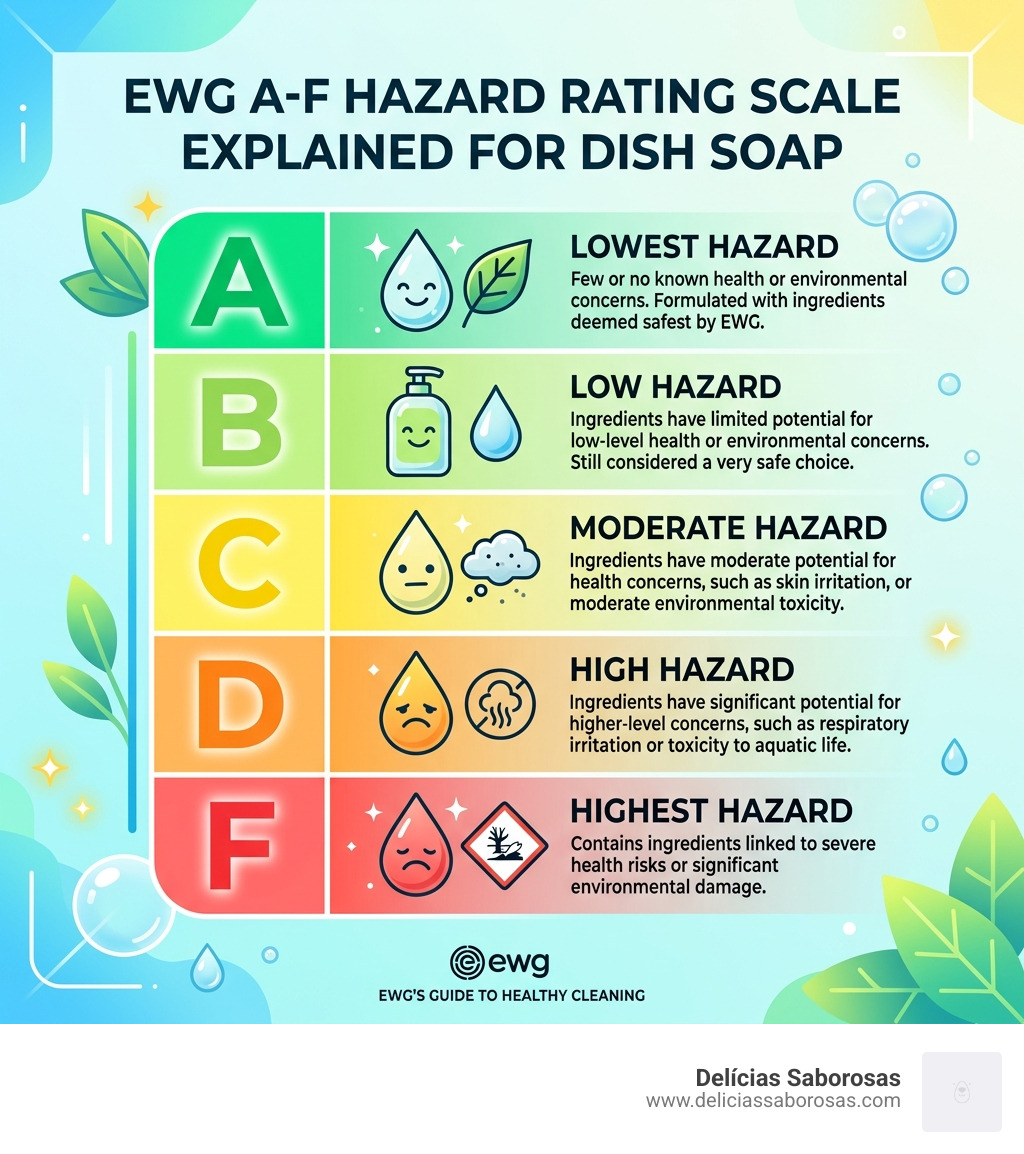
When we look at the back of a dish soap bottle, the list of chemical names can feel like a foreign language. That is where the Environmental Working Group (EWG) steps in. Their Guide to Healthy Cleaning acts as a translator, turning complex chemistry into a simple A-to-F grade.
For eco-friendly dish soaps, the EWG does not just look at the final bottle; they assess each listed ingredient. They use a weight-of-evidence approach. This means they do not simply average out ingredient scores. Instead, they look at cumulative hazard. If a product contains an ingredient with a known concern, even in a small amount, that product’s grade can reflect that specific risk.
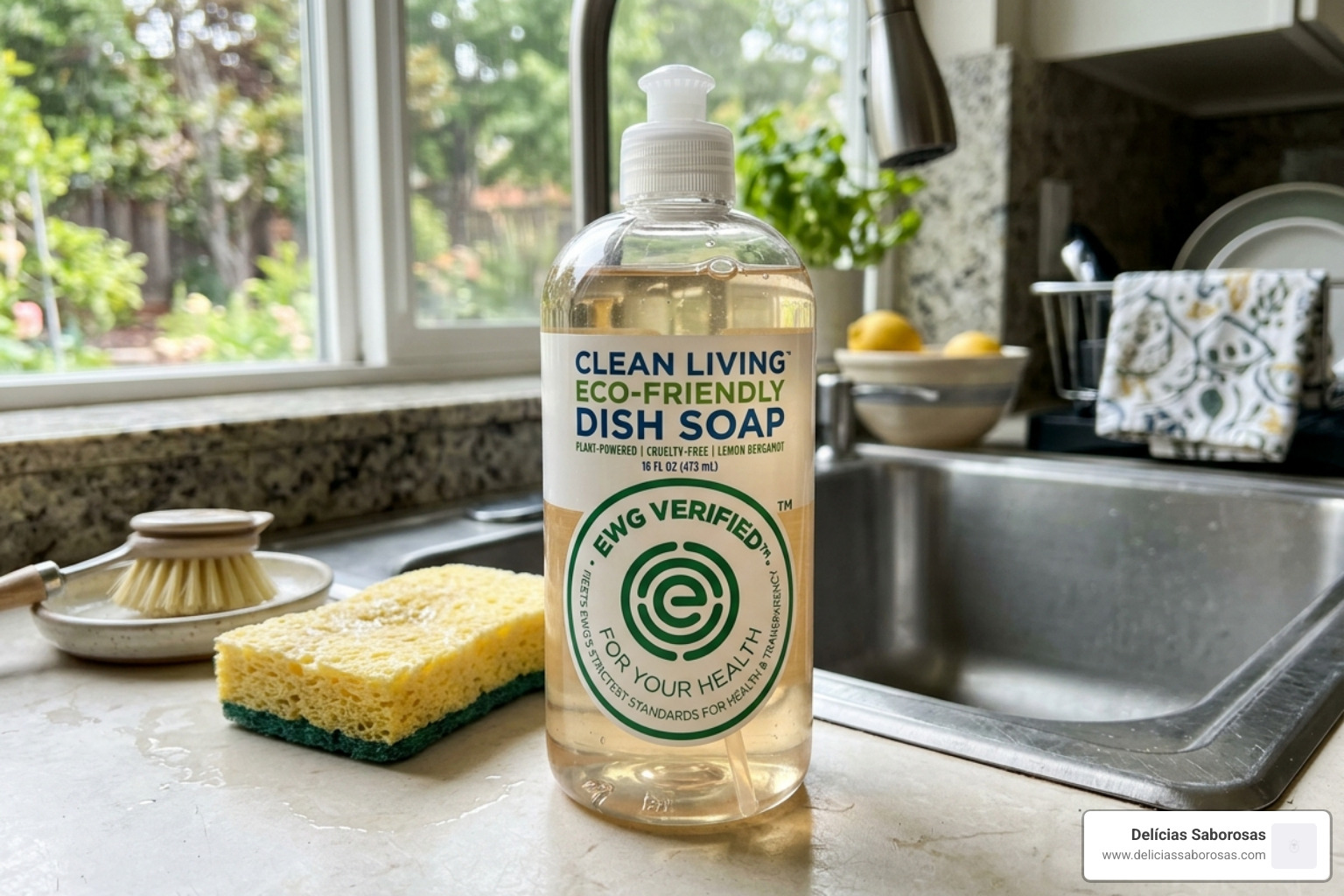
One of the highest honors a product can receive is the EWG VERIFIED mark. This is not just a sticker; it means the manufacturer has provided detailed ingredient disclosures that go beyond what is legally required. Many plant-based dish soap variants, such as those listed in the EWG’s Guide to Healthy Cleaning, have earned this distinction. This level of scrutiny helps confirm that the product meets strict criteria for human health and environmental impact.
We believe that transparency is the cornerstone of sustainable living. Just as we advocate for eco-friendly-all-purpose-cleaning-solutions, understanding the why behind a rating helps us all become more mindful consumers.
Decoding EWG Hazard Scores for Commercial Dish Soaps
The EWG scale is intuitive but detailed. An A rating represents the lowest hazard level. These products have few, if any, ingredients with known health or environmental risks. A B rating indicates a low-to-moderate concern, often due to a specific ingredient like a fragrance or a surfactant that might be somewhat irritating to the skin or somewhat toxic to aquatic life.
When we examine the data, we see that top-performing eco-friendly brands often have many products in the top tier. Some manufacturers have the majority of their cleaning products rated A or B by the EWG. Compare this to the rest of the industry, where 65% of the 326 dish soaps evaluated received a D or F.
For instance, the EWG’s Guide to Healthy Cleaning for lavender-scented dish soaps shows how a scented product can still maintain an A grade when it uses lower-hazard fragrance components and plant-derived cleaners.
Certifications and Safety Standards to Look For in Eco-Friendly Cleaners
Beyond the EWG score, several other certifications can help us navigate the cleaning aisle. Top-rated eco-friendly products often carry a strong mix of third-party marks:
- Safer Choice (EPA): This is a voluntary program by the U.S. Environmental Protection Agency. It certifies that every chemical ingredient in the product has been reviewed by EPA scientists to ensure it meets strict safety and performance standards.
- Leaping Bunny & PETA Cruelty-Free: These ensure that no animal testing was conducted at any stage of product development.
- Whole Foods Eco-Scale: This system rates products based on environmental impact and ingredient disclosure.
Products featured in the EWG’s Guide to Healthy Cleaning database that carry these marks help consumers identify formulas that align with lower-toxicity and more transparent standards.
Ingredient Analysis of Popular Eco-Friendly Dish Soap Variants
To truly understand what goes into a top-rated eco-friendly dish soap, we have to look at the building blocks. Most of these formulas rely on plant-derived surfactants. These are the agents that help lift grease from dishes.
While these options are generally lower hazard than many conventional formulas, the EWG does note some concern for specific ingredients. For example, sodium coco-sulfate (derived from coconut oil) is a common surfactant in plant-based dish soaps. While it is often used as an alternative to harsher sulfates, it can still cause skin irritation for some people and poses a low-level risk for aquatic toxicity if it enters waterways in high concentrations.
Another ingredient often discussed is phenoxyethanol, a preservative. In green cleaning, it is used to prevent mold and bacteria growth. While generally considered a lower-concern option than some older preservative systems, it is still monitored for potential skin allergies.
| Ingredient | Common EWG Score | Primary Concern |
|---|---|---|
| Water | A | None |
| Citric Acid | A | Low (pH adjuster) |
| Sodium Coco-Sulfate | C | Skin Irritation / Aquatic Toxicity |
| Lauramine Oxide | B/C | Skin Irritation |
| Phenoxyethanol | C | Skin Allergies |
Understanding these nuances is vital. Just as you might look for your-dishes-best-friend-eco-friendly-natural-dishwasher-rinse to complete your kitchen routine, knowing your soap’s ingredients is an important step toward a lower-toxicity home.
Scented vs. Fragrance-Free Options in Dish Soap
This is where the ratings often diverge. In the EWG database, “Fragrance” is frequently a black box because companies are not legally required to list the specific chemicals that make up a scent.
- Free & Clear formulas: These variants consistently score an A. Without dyes or perfumes, they avoid some of the most common sources of potential allergens.
- Scented Variants: Products like pear-scented dish soaps in the EWG database and almond-scented versions typically score a B. This is usually because fragrance components, even if plant-derived, can carry a slightly higher hazard score than the rest of the formula.
If you have sensitive skin or want the simplest option possible, a Free & Clear version is the safest place to start. However, if you prefer a fresh scent, the use of essential oils and safer synthetics can still be a meaningful improvement in ingredient transparency. If you want full control over ingredients, you could even try concocting-your-own-eco-friendly-all-purpose-cleaner for other areas of your home.
Hidden Toxins in Conventional Alternatives and the Importance of Transparency
Why do we care so much about these ratings? Because many conventional dish soaps can contain ingredients or contaminants that are less transparent and potentially more concerning.
Some commonly discussed concerns include:
- 1,4-Dioxane: A carcinogen that can appear as a byproduct of manufacturing in some ethoxylated ingredients.
- Phthalates: Often associated with undisclosed fragrance mixtures and linked to endocrine disruption concerns.
- Formaldehyde: Used in some preservative systems and classified as a known human carcinogen.
- DEAs/MEAs/TEAs: These can react with other ingredients under certain conditions to form nitrosamines.
By choosing transparent brands, consumers can better avoid hidden hazards. This philosophy extends to all parts of the home, which is why we are also passionate about eco-friendly-laundry-detergents.
Health and Environmental Impact: Beyond the Label
When we wash our dishes, the soap does not just disappear. It travels through our pipes and into the water system. This is why acute aquatic toxicity is a major factor in EWG ratings. Ingredients that are biodegradable are generally better, but they can still affect fish and plant life before they fully break down.
Even within a single product line, there are variations. For example, the EWG listing for grapefruit-scented dish soap has seen its rating fluctuate over the years as formulations change. Older versions actually scored lower due to different preservative systems. This highlights the importance of checking current EWG data rather than relying on a product’s reputation alone.
For those concerned about the planet, using a biodegradable-laundry-powder-the-best-way-to-clean-your-clothes and a lower-hazard dish soap can help reduce your household’s overall environmental burden.
Managing Skin Allergies and Irritation with Informed Choices
Dishpan hands are not just an expression; they are often a form of contact dermatitis. Many conventional soaps have a very high pH to cut through grease, which can strip the natural oils from your skin.
Plant-based dish soaps are generally pH-balanced and often marketed as hypoallergenic. However, if your skin still reacts, it may be due to surfactants like sodium coco-sulfate. In these cases, we recommend:
- Switching to a Free & Clear version.
- Wearing gloves for long washing sessions.
- Looking for DIY recipes, like a mother-earths-secret-eco-friendly-laundry-detergent-recipe, which can sometimes inspire milder approaches for household cleaning.
Practical Tips for Eco-Friendly Dishwashing
Choosing a safer dish soap is only half the battle. How we wash matters just as much. Here are some practical tips to keep your kitchen routine lower waste and lower impact:
- The Quarter-Size Rule: Concentrated formulas often need only a small amount on a sponge. Using more does not necessarily get dishes cleaner; it mostly wastes product and increases rinse load.
- Pre-Soak, Do Not Scrub Harder: Instead of using more soap and water on dried-on food, soak the pan in warm water and a small drop of soap for 10 minutes. This can save water and effort.
- Sponge Hygiene: The kitchen sink can harbor a surprising amount of bacteria. Sanitize sponges regularly in the microwave if wet, or soak them in vinegar. Better yet, switch to natural fiber dishrags that can be tossed in the wash.
- Read Ingredient Policies: Some manufacturers maintain a list of ingredients they refuse to use. Reviewing those standards can help you spot better formulas across the cleaning aisle.
Frequently Asked Questions about Choosing Safer Dish Soap
Is commercially available eco-friendly dish soap truly safer than conventional brands?
Yes, in the vast majority of cases. While “eco-friendly” is a marketing term that isn’t strictly regulated, brands that seek third-party certifications (EWG, Safer Choice) are demonstrably safer. They eliminate high-hazard carcinogens and endocrine disruptors found in 65% of conventional soaps.
Which dish soaps have the best EWG rating?
The “Free & Clear” versions of transparent, plant-based brands usually earn the “A” rating. The EWG’s Guide to Healthy Cleaning highlights several top-tier choices in this category.
Do eco-friendly dish soaps contain harmful fragrances or dyes?
Most reputable eco-brands avoid synthetic dyes entirely. Regarding fragrances, many use essential oils or safer synthetics. However, “fragrance” is still the most common reason a soap drops from an “A” to a “B” rating. If you have allergies, always choose fragrance-free.
Conclusion
At Delícias Saborosas, we believe that every small change in your home ripples outward to the rest of the planet. Choosing a dish soap that meets high EWG standards is a powerful, progressive step for any mindful consumer. By looking past the pretty labels and diving into the scientific data provided by the EWG, you are taking control of your family’s health and preserving the world’s water for future generations.
Whether you are looking for the best store-bought options or exploring DIY cleaning, we are here to empower your journey toward a sustainable, toxin-free life. For more tips on planet-preserving products and progressive living, visit us at https://www.deliciassaborosas.com/. Happy (and safe) washing!
