
Your Windows Are Cleaner Than You Think — But at What Cost?
If you’re looking for the best sustainable window cleaning product, here’s a quick overview of your top options:
Top Sustainable Window Cleaning Products at a Glance:
| Product Type | Best For | Key Feature |
|---|---|---|
| Refill tablets | Reducing plastic waste | Dissolve in water, no bottle needed |
| Vinegar-based sprays | Everyday streak-free cleaning | Plant-powered, ammonia-free |
| High-yield concentrates | Cost-conscious eco buyers | 1 liter = ~200 applications |
| ECOCERT-certified cleaners | Natural ingredient purists | 100% natural origin ingredients |
| Pure water systems | Professional or outdoor use | Zero chemicals needed |
Picture this: it’s a bright winter morning. You settle in with your coffee, glance out the window — and all you see is smear. So you grab a paper towel and a bottle of spray. Done in 30 seconds, right?
But that quick fix comes with a hidden cost.
More than 51,000 trees are cut down every single day in North America just to keep up with paper towel demand. Worldwide, we throw away 254 million tons of paper towels each year. And most conventional glass cleaners contain ammonia and other harsh chemicals that can irritate the lungs, trigger allergies, and wash into local waterways.
For eco-conscious families, that’s not a small thing. What you spray on your windows ends up somewhere — in the air your kids breathe, down the drain, and eventually into the environment.
The good news? Switching to a sustainable window cleaning product doesn’t mean settling for streaky glass or complicated routines. In fact, many green options clean just as well — or better — than the conventional stuff.
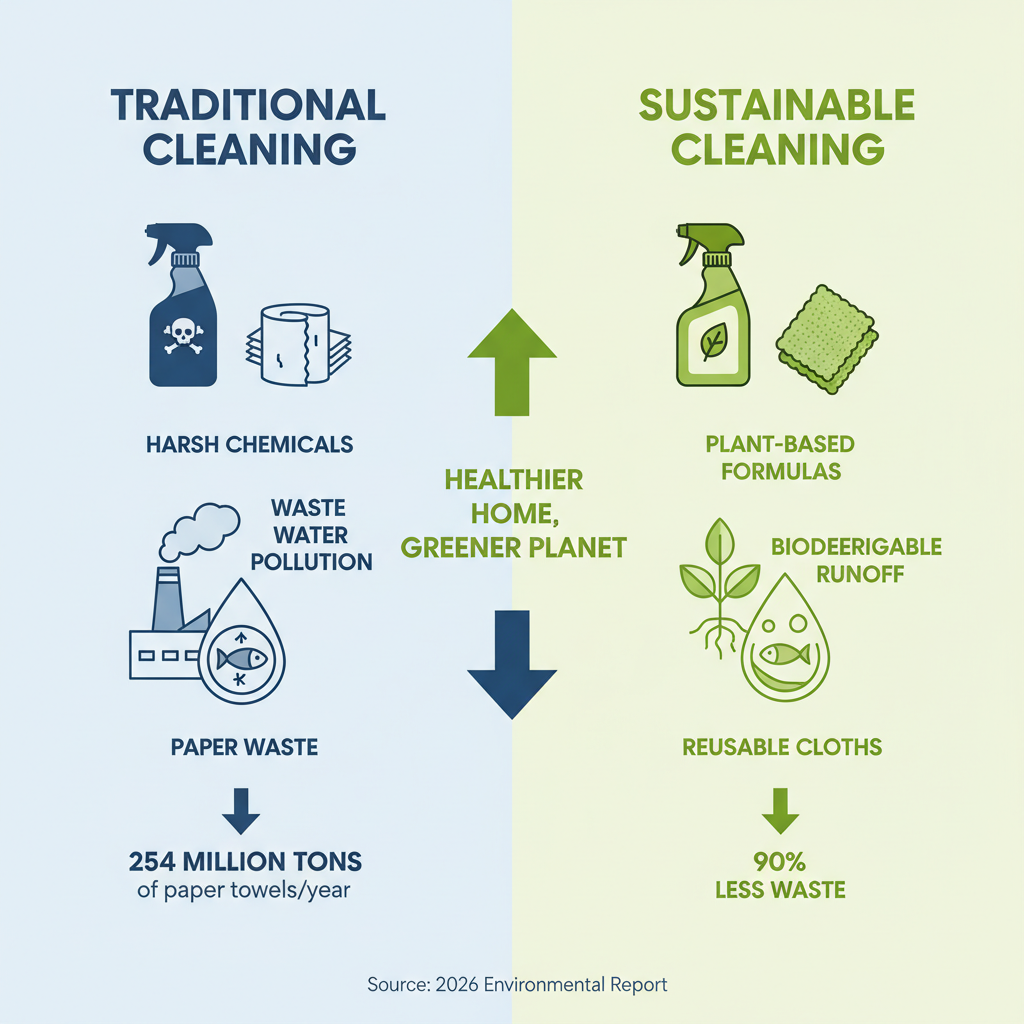
Why Switch to a sustainable window cleaning product?
Making the jump to a sustainable window cleaning product isn’t just about being “trendy”—it’s about creating a healthier sanctuary for your family. Traditional blue sprays often rely on ammonia, a pungent chemical that can cause eye and throat irritation, headaches, and even more severe respiratory issues for those with asthma or Multiple Chemical Sensitivities (MCS).
When we choose eco-friendly alternatives, we are opting for biodegradable surfactants and plant-based solvents that break down naturally without leaving a toxic legacy. These products significantly reduce Volatile Organic Compounds (VOCs) in your indoor air. If you’re looking for ways to transition your entire home, check out these eco-friendly hacks to clean windows that simplify the process.
Beyond health, the environmental logic is undeniable. Consider the sheer volume of waste generated by the global household cleaners market, which was valued at $25.5 billion in 2016 and continues to grow. By choosing concentrated or refillable options, we stop the cycle of buying and tossing single-use plastic bottles every month.

| Feature | Traditional Chemical Cleaners | Sustainable Window Cleaning Product |
|---|---|---|
| Main Solvent | Ammonia or Isopropanol | Vinegar (Acetic Acid) or Plant-Ethanol |
| Surfactants | Synthetic/Petroleum-based | Plant-derived/Biodegradable |
| Fragrance | Synthetic Musks/Phthalates | Essential Oils or Fragrance-Free |
| Packaging | Single-use Plastic | Refillable, Concentrated, or Recycled |
| Health Impact | Potential Respiratory Irritant | Hypoallergenic/Non-toxic |
Top-Rated Eco-Friendly Solutions for Every Home
Finding the right sustainable window cleaning product depends on your lifestyle. Are you a “grab and go” cleaner, or do you prefer the “mix and save” approach? Modern green chemistry has given us incredible variety, from ready-to-use sprays to tiny tablets that pack a punch.
One of the most exciting innovations is the refill tablet. Instead of shipping a bottle that is 90% water (which is heavy and carbon-intensive to transport), these tablets arrive in compostable packaging. You simply drop one into a reusable spray bottle with warm water, let it dissolve, and you’re ready to go. For those who want to dive deeper into specific brands, our guide on green cleaning sprays for glass highlights the best performers on the market.
If you have a lot of glass—perhaps a sunroom or large sliding doors—concentrated formulas are your best friend. Some professional-grade concentrates are so efficient that a single 1-liter bottle can provide up to 200 applications. This “less is more” philosophy not only saves a massive amount of plastic but also significantly lowers the cost per use.
Best Professional-Grade sustainable window cleaning product
For those who demand a “showroom” finish or have outdoor surfaces like solar panels and greenhouses, professional-grade green methods are the way to go. Pure water technology is a game-changer here. These systems use deionization (DI) or reverse osmosis (RO) to strip water of all minerals and impurities. When you clean with pure water, there is no need for soap at all. The water itself acts as a solvent, and because there are no minerals left behind, the windows dry to a perfect, streak-free finish.
If you aren’t ready to invest in a DI system, look for professional concentrates that are designed to work with window vacuums. These formulas are low-sudsing and high-slip, ensuring your vacuum glides across the glass without leaving a trace. You can find more details on these high-performance options in our article on environmentally friendly window cleaners.
Best Plant-Based Options for Mindful Homes
For the purists among us, certifications like ECOCERT offer peace of mind. A product with this seal ensures that at least 95% of the ingredients are of natural origin. Many of these cleaners utilize the power of vinegar (acetic acid) and organic essential oils like eucalyptus or citrus.
Vinegar is a powerhouse because its acidity penetrates bacterial cells and breaks down the molecular bonds of grease and grime. When paired with plant-derived surfactants, these cleaners perform just as well as their chemical counterparts without the “chemical” smell. To explore more plant-powered brands, check out our second part on environmentally friendly window cleaners.
DIY Recipes and Professional Tools for Streak-Free Results
You don’t always need to buy a pre-made sustainable window cleaning product. Some of the best solutions are sitting in your pantry. A classic, effective recipe involves mixing one part distilled water with one part white vinegar. Using distilled water is a “pro tip” because it prevents the mineral spots often caused by hard tap water.
For a more advanced DIY cleaner that rivals commercial brands, try this mix:
- 2 cups distilled water
- 1/4 cup white vinegar
- 1/4 cup rubbing alcohol (helps with fast evaporation and smudges)
- 1 tablespoon cornstarch (acts as a very fine abrasive to lift stubborn residue)
- 5-10 drops of lemon or peppermint essential oil
The tool you use is just as important as the liquid. While paper towels are the traditional choice, they are wasteful and often leave lint behind. Squeegees are the gold standard for a reason—they remove the liquid entirely rather than just moving it around. If you prefer cloths, skip the synthetic microfibers which can shed microplastics. Instead, opt for reusable cotton cloths or old t-shirts. For more homemade inspiration, read our gleam-and-glisten natural glass cleaner recipe.
The Pro Method for Streak-Free Windows:
- Dust first: Use a dry cloth to remove loose cobwebs and dust.
- Mist, don’t soak: Too much product is the #1 cause of streaks.
- Top-to-bottom: Always work from the top down so drips don’t ruin your finished work.
- The S-Pattern: If using a squeegee, move in a continuous “S” shape to keep the water moving toward the edges.
- Detail the edges: Use a dry cotton cloth to wipe the very edges of the frame.
For more technical tips on the application, see our eco-friendly hacks to clean windows 2.
Frequently Asked Questions about Green Glass Care
What certifications should I look for in a sustainable window cleaning product?
Not all “green” labels are created equal. To avoid “greenwashing,” look for these reputable third-party certifications:
- EPA Safer Choice: Verified by the U.S. Environmental Protection Agency for human and environmental health.
- Leaping Bunny: Ensures the product and its ingredients were never tested on animals.
- ECOCERT: A rigorous European standard for natural and organic content.
- Climate Positive: Indicates the company restores more carbon, water, and energy than it uses during production.
- Ingredient Transparency: Truly sustainable brands will list every ingredient and its function on the label or website.
How do refillable cleaners reduce environmental impact?
Refillable systems tackle the waste problem from multiple angles. First, they eliminate the need for new single-use plastic bottles, which often end up in landfills or oceans. Second, by shipping only the active ingredients (as tablets or concentrates), companies drastically reduce the weight and volume of their shipments. This leads to a much lower carbon footprint during transportation. Many modern refillable bottles are made from 100% post-consumer recycled plastic, closing the loop on waste.
Are homemade window cleaners as effective as chemical ones?
Absolutely. The acidity of vinegar is incredibly effective at cutting through the “traffic film” and grease that accumulates on windows. Alcohol-based DIY recipes evaporate quickly, which is the secret to a streak-free finish. While they might not have the neon blue color of traditional cleaners, they are safe for your pets, your children, and your lungs—all while being significantly more cost-effective.
Conclusion
At Delícias Saborosas, we believe that cleaning your home shouldn’t come at the expense of the planet. Choosing a sustainable window cleaning product is a small but powerful step in a progressive, mindful lifestyle. Whether you choose a high-yield concentrate, a simple vinegar DIY, or a professional-grade pure water system, you are contributing to a world with fewer chemicals and more trees.
Ready to transform the rest of your cleaning routine? Explore our full range of natural cleaners and join us in our planet-preserving mission. Let’s make green glass the new standard for every home!
