
Your Kitchen Deserves a Cleaner Clean — Without the Chemical Baggage
Top eco kitchen cleaning wipes are the easiest swap you can make for a safer, greener kitchen. Here are the best options to look for:
- Biom All-Purpose Wipes – 100% plant-based, home compostable, 99% water formula
- EcoSoul Bamboo Wipes – FSC-certified bamboo, compostable, chemical-free
- Wipex Table Bussers – Plant-based, biodegradable, kills 99.9% of bacteria, food-safe
- Caboo Bamboo Wipes – Sustainable bamboo and sugarcane, biodegradable
- MiracleWipes for Surfaces – Multi-purpose, plant-based cleaning agents
- Dr. Brite Multi-Purpose Wipes – Essential oil based, non-toxic
- Bambooee Reusable Wipes – Rayon from bamboo, washable and eco-friendly
Most of us don’t think twice about grabbing a wipe to clean up a kitchen mess. But those convenient little sheets? Many are made with synthetic plastics, harsh chemicals, and materials that take decades to break down.
That’s a problem — especially if you have kids or pets crawling around surfaces you just wiped.
The good news is that eco-friendly alternatives have come a long way. You no longer have to choose between a clean kitchen and a clean conscience.
Today’s best plant-based kitchen wipes can tackle grease, bacteria, and everyday grime — without leaving behind toxic residues, microplastics, or a mountain of non-degradable waste.
Below, we break down exactly what to look for, which products stand out, and how to make the smartest choice for your family and the planet.
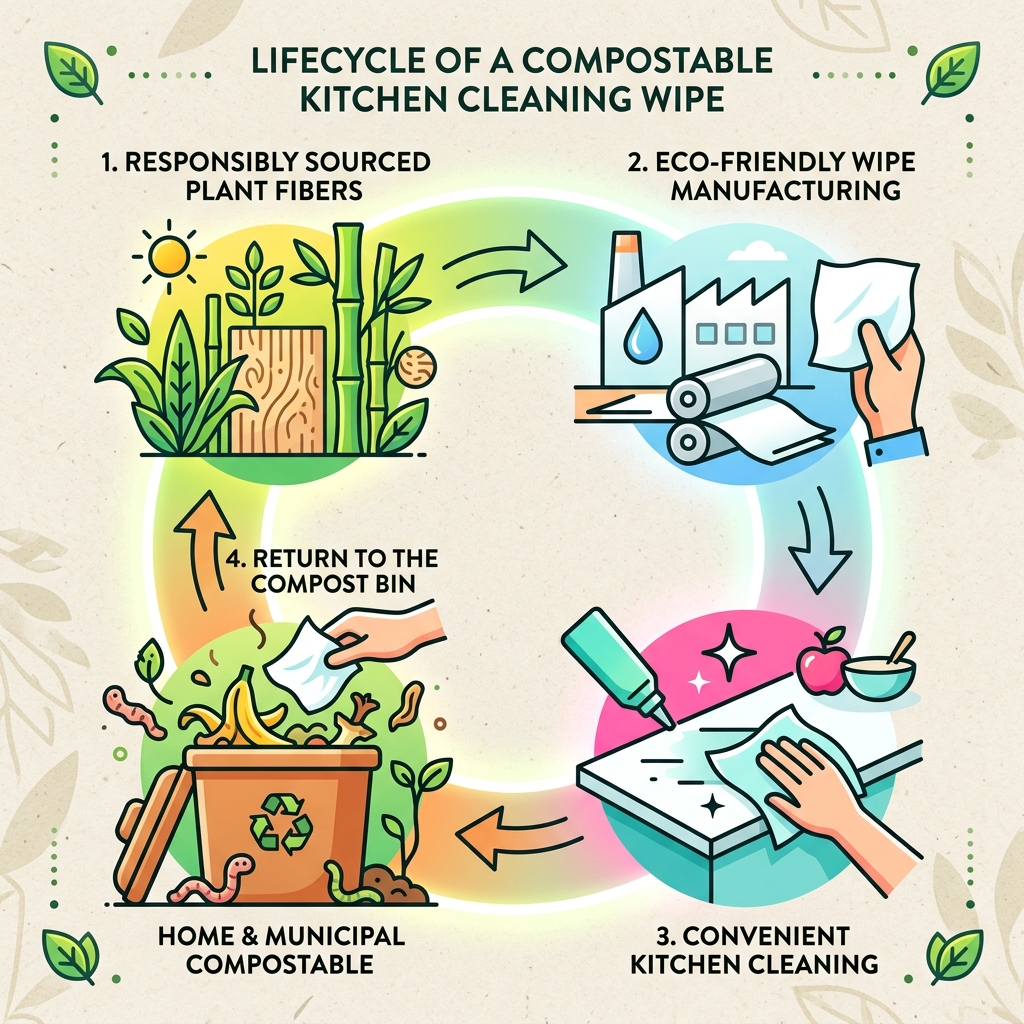
What Defines the Top Eco Kitchen Cleaning Wipes?
When we talk about the top eco kitchen cleaning wipes, we aren’t just looking for a green leaf on the packaging. To truly earn the “eco” title, a cleaning wipe needs to pass a rigorous checklist that covers everything from the fibers of the cloth to the liquid it’s soaked in.
First and foremost, a sustainable wipe must be plastic-free. Traditional wipes are often a blend of polyester or polypropylene—essentially, they are thin sheets of plastic. When you toss them, they don’t disappear; they break down into microplastics that contaminate our soil and waterways. Eco-friendly alternatives use 100% plant-based fibers like bamboo, wood pulp (viscose), or organic cotton.
Beyond the material, the ingredients in the cleaning solution matter immensely. We look for non-toxic ingredients that avoid the “Big Three” offenders:
- Quats (Quaternary Ammonium Compounds): Often found in antibacterial wipes, these have been linked to respiratory issues and skin irritation.
- Chlorine Bleach: Harsh on the lungs and the environment.
- Synthetic Fragrances: Often contain phthalates, which are known endocrine disruptors.
Instead, the best wipes use plant-derived surfactants, essential oils, and even skin-grade ingredients like aloe vera. For more ways to keep your home healthy, check out our guide on green hacks for sparkling kitchen surfaces.
Certifications to Look For
To cut through “greenwashing,” we recommend looking for third-party certifications. These provide a layer of accountability:
- FSC-Certified: Ensures the plant fibers come from responsibly managed forests. Learn more at the Forest Stewardship Council.
- USDA Biobased: Confirms the percentage of renewable biological ingredients (look for 90% or higher).
- EWG Verified: Indicates the product meets the Environmental Working Group’s strictest standards for health and transparency.
By choosing products with these seals, you’re supporting eco-friendly all-purpose cleaning solutions that prioritize the planet as much as they do your countertops.

Choosing the Best Materials: Bamboo vs. Traditional Fibers
If you’ve ever wondered why bamboo is taking over sustainable cleaning, the answer lies in its incredible biology. Bamboo isn’t actually a tree; it’s a grass. This distinction is vital for sustainability.
While an average tree might take 30 years to grow 600 inches, some species of bamboo can grow a staggering 35 inches in just 24 hours. This rapid growth rate makes it one of the most renewable resources on Earth. When harvested, bamboo regrows from its existing root system, meaning it doesn’t require replanting or heavy pesticides to thrive.
In terms of performance, bamboo fibers are naturally stronger and more absorbent than the wood pulp used in traditional paper-based wipes. This means you can often clean a larger area with a single wipe without it tearing or drying out mid-task. If you’re feeling adventurous, you can even learn up your cleanliness game with homemade eco-friendly surface wipes using reusable bamboo cloths.
The “Kun” Factor
Bamboo also contains a unique, natural component called “Kun.” This bio-agent provides the plant with inherent antibacterial and antifungal properties. While much of this is reduced during the processing into viscose, many experts believe bamboo-based products still offer a more hygienic touch compared to synthetic alternatives that can actually harbor bacteria if left damp.
Traditional synthetic fibers, on the other hand, are a major source of microplastic pollution. Every time a plastic-based wipe is used and disposed of, it contributes to a cycle of environmental harm. Switching to 100% voscose or bamboo fibers ensures that your cleaning routine doesn’t leave a permanent footprint.
Sustainability of Bamboo in Top Eco Kitchen Cleaning Wipes
We love bamboo because it’s a “triple threat” for the environment:
- Carbon Sequestration: Bamboo forests absorb more CO2 and release more oxygen than equivalent stands of trees.
- Soil Health: Its deep root systems prevent soil erosion.
- Panda-Friendly Sourcing: Leading brands like EcoSoul ensure their bamboo is sourced from areas that do not interfere with giant panda habitats.
Specialized Solutions for Every Kitchen Surface
Not all kitchen messes are created equal. A spill on a laminate counter is a different beast than a smudge on a stainless steel fridge or a sticky high chair tray. To get the best results, sometimes you need a specialized tool.
Stainless Steel Mastery
Stainless steel is the crown jewel of the modern kitchen, but it’s a magnet for fingerprints. Traditional stainless steel wipes often rely on petroleum-based oils to create a shine. For an eco-friendly alternative, we look to brands like MiracleWipes.
- MiracleWipes Stainless Steel Wipes use bio-based ingredients to cut through grease without leaving streaks.
- Weiman is a household staple that has made strides in offering more effective, moisture-rich wipes, though you should always buff with a microfiber cloth afterward for that professional “tropical oasis” glow.
For those who prefer a spray-and-wipe approach, we have a fantastic your-essential-kitchen-companion-green-kitchen-cleaning-spray-recipe that works wonders on appliances.
Food Prep and High Chairs
When cleaning areas that come into direct contact with food—or a toddler’s mouth—safety is non-negotiable. Wipex Table Bussers are a standout here. They are made from 100% plant-based fibers and are specifically formulated to be food-safe while still killing 99.9% of bacteria like E. coli and Salmonella.
Non-Toxic Performance of Top Eco Kitchen Cleaning Wipes
The performance of top eco kitchen cleaning wipes often surprises skeptics. You don’t need bleach to get a deep clean. Many eco-wipes use:
- Citric Acid: A natural disinfectant found in citrus fruits.
- Decyl Glucoside: A gentle, plant-derived surfactant that lifts grease.
- Essential Oils: Like lavender, eucalyptus, and lemon, which provide natural antimicrobial properties and a fresh scent.
If you’re looking for a budget-friendly way to maintain your counters, a homemade vinegar cleaner for kitchens can be used with compostable dry wipes for a custom eco-solution.
Disposal and Environmental Impact: Compostable vs. Biodegradable
This is where things get a bit technical, but stay with us—it’s important! There is a big difference between a wipe being “biodegradable” and “compostable.”
Biodegradable simply means the product will eventually break down through biological processes. However, there is no set timeframe for this. A plastic wipe might be called “biodegradable” if it breaks into tiny microplastics over 100 years. That’s not what we want.
Compostable is a much stricter term. It means the product will break down into non-toxic, nutrient-rich organic matter within a specific timeframe (usually weeks or months) under composting conditions.
| Feature | Biodegradable Wipes | Compostable Wipes |
|---|---|---|
| Material | May contain some synthetics | 100% Plant-based |
| Breakdown Time | Undefined (can be years) | Weeks to months |
| End Result | Small fragments | Nutrient-rich soil |
| Microplastics | Often leaves them behind | Zero microplastics |
Home vs. Industrial Composting
Not all compostable wipes can go in your backyard bin.
- Home Compostable: Wipes like Biom are designed to break down at the lower temperatures found in home compost piles.
- Industrial/Commercial Compostable: Certain plant-based wipes often require the high heat of an industrial facility to break down properly.
Always check the packaging for the “OK Compost” or “BPI Certified” seals. And remember, even if a wipe is compostable, if you use it to clean up something toxic (like motor oil or heavy chemicals), it shouldn’t go in your compost! For more tips on sustainable disposal, see our eco-friendly tips for kitchen maintenance.
The Packaging Problem
We also have to consider the container. Many top eco kitchen cleaning wipes are now moving toward refill systems. Biom, for example, offers a beautiful, reusable canister so you only have to buy the refills in slim, recyclable pouches. This significantly reduces the amount of high-density plastic heading to the landfill.
Frequently Asked Questions about Eco Kitchen Wipes
Are top eco kitchen cleaning wipes as effective as traditional disinfectants?
Yes, but it depends on what you mean by “clean.” Most everyday messes don’t require medical-grade disinfection. Mechanical cleaning—the act of physically wiping away dirt and germs with a high-quality fiber—removes the vast majority of pathogens.
However, if you need to kill 99.9% of bacteria (like after prepping raw chicken), look for eco-brands like CleanLIFE that use plant-derived antimicrobials or organic acids. You can also supplement your routine with diy-lemon-based-cleaners-for-countertops which have natural acidity to help fight germs.
Can I compost kitchen cleaning wipes at home?
Only if they are specifically labeled “Home Compostable.” If they aren’t, they likely need the heat of an industrial facility. Also, be mindful of what you’ve wiped up. Grease and food scraps are fine for compost, but avoid composting wipes used with heavy chemical cleaners. If you’re looking for a zero-waste alternative, consider up your cleanliness game with homemade eco-friendly surface wipes-2 which focuses on reusable cloths.
How do I avoid microplastics when choosing kitchen wipes?
The easiest way is to read the “Material” section on the label. Look for 100% Bamboo, 100% Viscose, or 100% Cellulose. Avoid anything that lists “polyester,” “polypropylene,” or “scrubbing beads,” as these are tell-tale signs of plastic. Choosing plastic-free options is a key part of eco-friendly tips for kitchen maintenance-2.
Conclusion
At Delícias Saborosas, we believe that every small choice adds up to a big impact. Switching to top eco kitchen cleaning wipes is more than just a cleaning hack—it’s a commitment to a lifestyle that values health, transparency, and the future of our planet.
Whether you choose the home-compostable convenience of Biom, the rapid renewability of EcoSoul bamboo, or the specialized shine of MiracleWipes, you are proving that effective cleaning doesn’t have to come at the cost of the environment.
We are proud to be part of the sustainable consumer goods industry, offering planet-preserving products for mindful consumers. By ditching the plastic-filled, chemical-heavy wipes of the past, you’re making your kitchen a safer place for your family and a kinder place for the Earth.
Ready to take your green cleaning to the next level? Explore More info about DIY recipes for even more ways to wipe out waste!
