
Why Every Surface in Your Nursery Deserves a Safer Clean
Earth friendly baby cleaners are non-toxic, plant-based cleaning products that are safe for babies, biodegradable, and produced with minimal environmental impact.
Top picks at a glance:
- Multi-surface spray: Look for EPA Safer Choice certified, fragrance-free formulas
- Laundry detergent: Choose 97%+ biobased, dye-free, and Leaping Bunny certified
- Bath and body wash: Prioritize tearless, 95%+ natural origin, pediatrician-tested options
- Toy and high chair cleaner: Opt for plant-derived, no-rinse, food-safe formulas
- Concentrate refills: EWG Verified, 100% water, plant, and mineral-derived — best for reducing plastic waste
Here’s something worth thinking about: a baby’s skin is thinner and more permeable than an adult’s. That means whatever lands on the floor, the high chair tray, or the bath toys can be absorbed through their skin — or end up in their mouth.
As one developmental pediatrician put it, babies explore everything with their hands and mouths. So the residue left behind by the products you clean with genuinely matters.
The problem? The word “natural” on a label means almost nothing. It’s not a regulated claim. A product can call itself natural while still containing synthetic fragrances hiding phthalates, ammonia, or quaternary ammonium compounds — all linked to respiratory irritation and hormonal disruption.
That’s why this guide focuses on what’s actually inside the bottle — ingredients, certifications, and packaging — not just the marketing on the front.
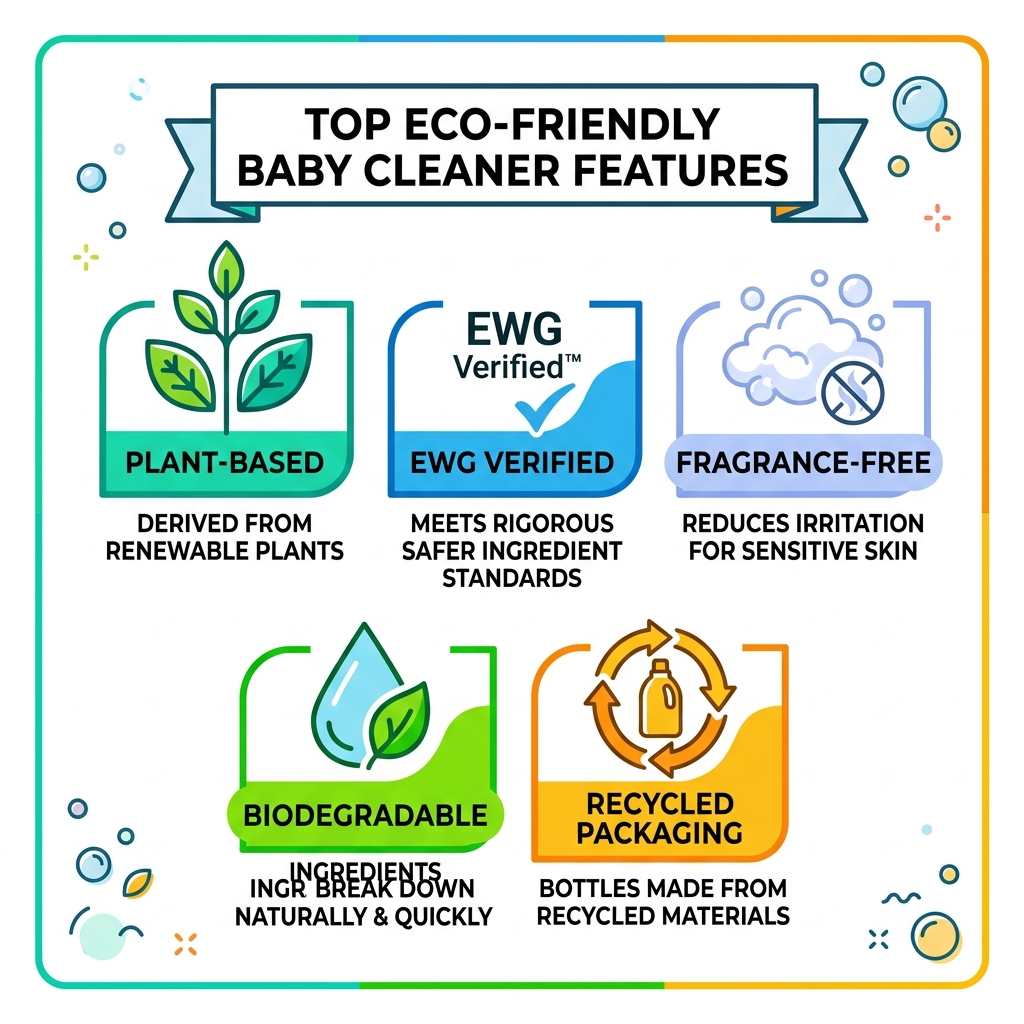
What Defines a Truly Earth Friendly Baby Cleaner?
When we talk about a truly earth friendly baby cleaner, we aren’t just looking at the liquid inside the bottle. We are looking at the entire lifecycle of the product. Sustainability means the product is made, used, and disposed of with minimal damage to the planet and the people living on it.
According to the ISO 16128 standard, high-quality eco-cleaners often contain an average of 95% to 99.7% ingredients of natural origin. But “natural” is just the starting point. We also need to look for:
- Biodegradability: Does the formula break down safely in our waterways without harming aquatic life?
- B-Corp Certification: This is a gold standard for companies. It means the business meets high standards of verified social and environmental performance, public transparency, and legal accountability.
- EWG Verified: This seal ensures the product avoids the Environmental Working Group’s “ingredients of concern” and follows strict transparency guidelines.
- EPA Safer Choice: This indicates that the EPA’s scientific team has screened every ingredient for health and environmental safety.
Packaging is the other half of the battle. Look for 100% PCR (Post-Consumer Recycled) bottles. Some innovative brands have even managed to create 100% recyclable triggers with zero plastic components. By choosing concentrated refills, we can reduce plastic use by up to 47% or more. For more on how to integrate these into your daily life, check out our eco-friendly cleaning routines for families.
Ingredients to Prioritize and Avoid in Your Nursery
Reading a label can feel like deciphering a chemistry textbook. However, knowing which chemicals are “red flags” can save your baby from unnecessary exposure to respiratory irritants and endocrine disruptors.
| Ingredient Type | Green-Flag (Prioritize) | Red-Flag (Avoid) |
|---|---|---|
| Surfactants | Decyl Glucoside, Coco-Glucoside | Sodium Lauryl Sulfate (SLS), SLES |
| Preservatives | Sodium Benzoate, Potassium Sorbate | Parabens, Methylisothiazolinone |
| Acids/Bases | Citric Acid, Sodium Bicarbonate | Ammonia, Chlorine Bleach |
| Fragrance | Fragrance-Free, Organic Extracts | Phthalates, Synthetic “Fragrance” |
| Disinfectants | Hypochlorous Acid (in specific uses) | Quaternary Ammonium Compounds (Quats) |
Avoid ammonia at all costs; it is a potent respiratory and eye irritant. Similarly, “Quats” (often listed as benzalkonium chloride) are linked to skin irritation and respiratory issues. If you share your home with furry friends, their paws and noses are just as sensitive; see our tips for safe cleaning around pets for more details.
Green-Flag Ingredients for an Earth Friendly Baby Cleaner
When scanning for a safe earth friendly baby cleaner, look for these “safe-bet” ingredients:
- Decyl Glucoside: A plant-derived cleanser (often from corn or coconut) that is gentle but effective at breaking down grease and grime.
- Sodium Benzoate: One of the safest plant-based preservatives, often used in food, which prevents the growth of bacteria in water-based cleaners.
- Organic Botanicals: Ingredients like Aloe Vera, Lavender, and Chamomile not only soothe the skin but are grown without synthetic pesticides.
- Hypochlorous Acid: A substance naturally produced by white blood cells to fight infection. It can kill 99.9% of viruses without leaving toxic chemical residues.
Why Fragrance-Free is Essential for Sensitive Skin
In cleaning, “fragrance” is often a “black box” for hundreds of undisclosed chemicals. Many of these are phthalates, which are known endocrine disruptors. Because a baby’s skin is so permeable, these VOCs (Volatile Organic Compounds) can be easily absorbed.
Choosing a truly fragrance-free option—rather than just “unscented,” which may contain masking fragrances—is the best way to minimize allergens. If a product does have a scent, ensure it comes from natural extracts like honeysuckle or rosemary rather than synthetic perfumes. For a deeper dive, read about safe natural cleaners for children.
Top Categories of Earth Friendly Baby Cleaner for Every Mess

Every mess requires a different approach. Whether you’re dealing with a “blowout” on a onesie or a crayon masterpiece on the coffee table, there is a sustainable solution.
Multi-Surface Sprays and Toy Sanitizers
For surfaces where babies play and eat, we need formulas that power through tomato sauce and grease without leaving a film that shouldn’t be ingested.
- Efficacy: Look for sprays that can handle food-grade stains while being safe for high chairs.
- Zero-Waste: Consider refillable systems. One bottle of concentrate can often make up to 16 bottles of surface cleaner, significantly reducing your carbon footprint.
- Tools: Swap paper towels for compostable Swedish dishcloths. One of these cloths can replace up to 17 rolls of paper towels!
For those with pets, ensuring these sprays are safe for licked paws is vital. You can find more info on safe cleaners for pets at home. Also, for those inevitable fingerprints on the windows, check out our guide on child-safe glass cleaner because kids touch everything.
Gentle Laundry and Fabric Care
Baby laundry is a never-ending cycle of spit-up, mud, and grass. A 97% biobased detergent is your best friend here.
- Stain Fighting: Plant-based enzymes are incredibly effective at breaking down biological stains like milk and pureed fruit.
- Septic Safe: These formulas are generally better for home septic systems and the environment.
- Cold Water Efficacy: Sustainable detergents are often formulated to work in cold water, saving energy with every load. Explore more about plant-based cleaning products for families to see how these fit into a green home.
Safe Bath and Body Washes
While technically personal care, these are essential “cleaners” for the nursery ecosystem.
- Microbiome Health: Look for 95%+ natural origin ingredients that protect the skin’s natural barrier.
- Tearless Formulas: Avoid products with numbing agents; instead, look for naturally mild surfactants like cocamidopropyl betaine.
- Certifications: Seek out Leaping Bunny (cruelty-free) and Vegan certifications to ensure your baby’s bath time is ethically sound.
Maximizing Safety: Cleaning vs. Disinfecting Around Babies
It is a common misconception that we need to “kill all germs” all the time. In fact, over-disinfecting can lead to “superbugs” and may interfere with a baby’s developing immune system.
- Cleaning: This is the physical removal of dirt and germs using soap and water. This should be your go-to for 95% of nursery tasks.
- Disinfecting: This uses chemicals to kill germs. Reserve this for “high-risk” scenarios:
- After a bout of the flu or RSV.
- If raw meat touched a surface.
- Messes involving bodily fluids.
When you do disinfect, remember the contact time. Most disinfectants need to sit wet on a surface for several minutes to actually work. Always clean the surface first, as dirt and grease can shield bacteria from the disinfectant. For more science-backed tips, see our research on safe natural cleaners for children.
Frequently Asked Questions about Sustainable Nursery Care
Are essential oils safe for babies and pets in cleaners?
Not all “natural” scents are safe. Essential oils are highly concentrated. Oils like tea tree, peppermint, and certain citrus oils can be toxic to pets (especially cats) if ingested or even diffused in high concentrations. For babies under three months, it is generally best to stick to completely unscented products. If you use oils, ensure they are at a very low dilution and used in well-ventilated areas.
How can I spot greenwashing on baby cleaning labels?
Greenwashing happens when a brand uses vague terms like “earth-loving” or “eco-safe” without any proof.
- Transparency: Does the brand list every ingredient, or just the “active” ones?
- Third-Party Seals: Look for MadeSafe, EWG Verified, or B-Corp logos. These aren’t easy to get.
- Corporate Accountability: Check if the company belongs to a circular economy initiative or partners with plastic-removal organizations.
Is DIY cleaner safer than store-bought earth-friendly brands?
While vinegar and water are great for some things, they have limitations. Vinegar is an acid that can damage certain surfaces (like stone) and it isn’t a registered disinfectant. Furthermore, DIY water-based cleaners lack preservatives, meaning they can grow dangerous bacteria or mold within days. Professional earth friendly baby cleaners are lab-tested for stability and safety, providing a level of protection that a spray bottle of kitchen vinegar simply can’t match.
Conclusion
At Delícias Saborosas, we believe that mindful parenting starts with the environment we create at home. Choosing an earth friendly baby cleaner is a small but powerful way to protect your child’s health while preserving the planet they will inherit.
By prioritizing transparency, seeking out third-party certifications, and opting for refillable, plant-based solutions, we can keep our nurseries sparkling clean without compromise. Peace of mind shouldn’t come with a chemical scent—it should come from knowing every surface your baby touches is truly safe.
Start your eco-friendly journey today and explore our range of progressive, planet-preserving products designed for families who care.
