
Why Your Laundry Routine Deserves a Cleaner Start
natural laundry detergent eco options are the best choice if you want to clean your family’s clothes without harsh chemicals, excess plastic, or ingredients that pollute waterways.
When evaluating natural laundry detergents, consider these high-performance categories:
- Ultra-Concentrated Liquids: Look for 10x concentrations that use plant-based enzymes to tackle tough stains.
- Free & Clear Formulas: Ideal for babies and allergies, these should be USDA Certified Biobased and free of dyes or fragrances.
- Minimalist Ingredients: Some of the best options use as few as six plant-derived ingredients for maximum transparency.
- Plastic-Free Tablets & Sheets: Perfect for zero-waste lifestyles and travel, eliminating the need for heavy plastic jugs.
- Bulk Sizes: Great for large families, offering hundreds of loads in a single eco-friendly container.
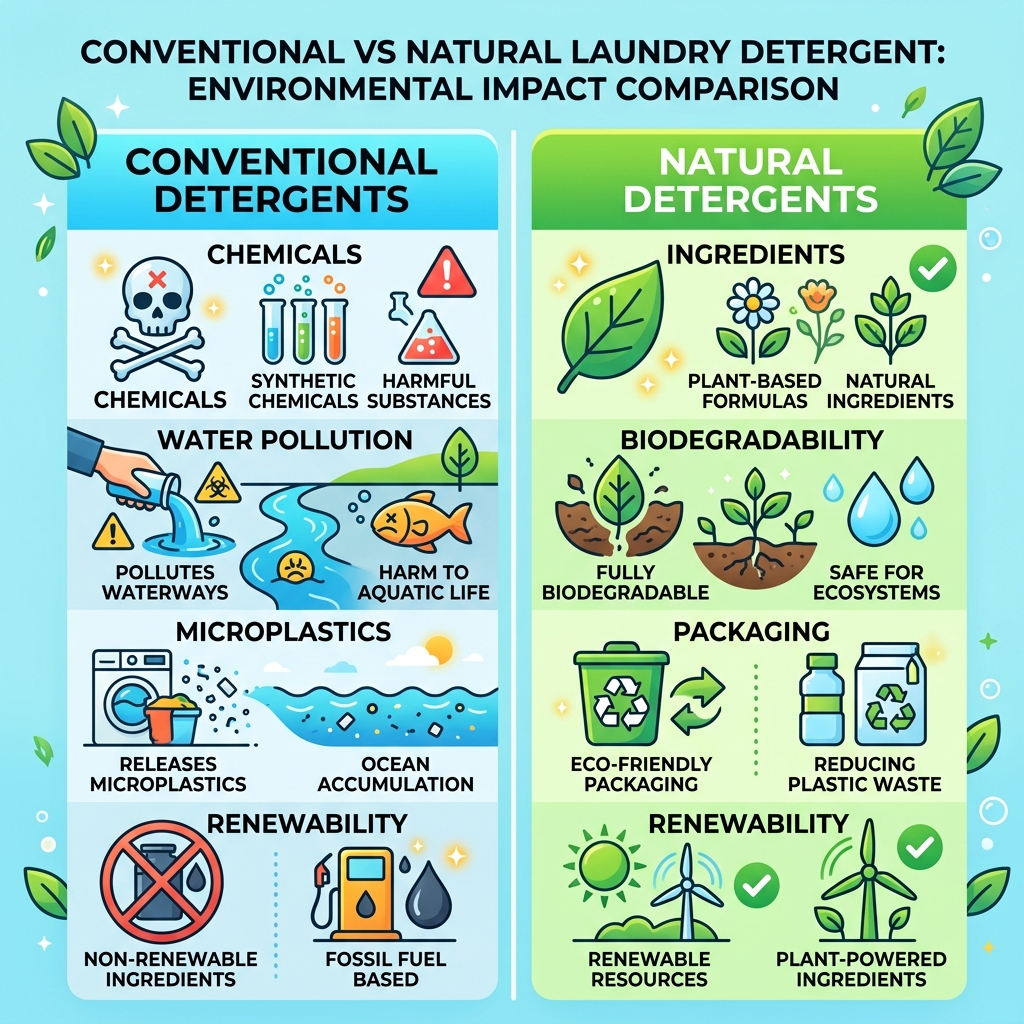
Conventional laundry detergents contain ingredients like optical brighteners, synthetic fragrances, and SLS that can irritate skin, disrupt hormones, and harm aquatic ecosystems. For families with young kids or anyone with sensitive skin, that’s a real problem — not just a marketing talking point.
The good news? Natural alternatives have come a long way. Real-world testing shows that plant-powered formulas with enzymes can remove tough stains just as effectively as conventional brands — including the dreaded peanut butter test.
Whether you’re dealing with a farmer’s muddy work clothes, a teenager’s sports kit, or a baby’s delicate onesies, there’s a natural detergent built for your life.
This guide breaks down the best options, what to look for, and how to get the most out of every wash.
Why Switch to a Natural Laundry Detergent Eco Option?
We often think about the food we eat and the air we breathe, but we rarely consider the residue left on the fabric touching our skin 24/7. Switching to a natural laundry detergent eco choice isn’t just a trend; it’s a significant upgrade for your household health and the planet.
Hypoallergenic Benefits and Skin Health
Many of us have experienced that mysterious itch or a sudden rash after switching to a new “mountain fresh” conventional detergent. That’s often because of synthetic fragrances and formaldehyde-releasing preservatives. Natural detergents, like those we champion at Delícias Saborosas, prioritize hypoallergenic formulas. For instance, high-quality natural brands often use minimal ingredient lists in their Free & Clear versions, significantly reducing the “chemical soup” your skin absorbs.
Protecting Our Waterways
Every time you run a load, the wastewater goes somewhere. Conventional detergents often contain phosphates and optical brighteners that don’t easily biodegrade. These can lead to algal blooms that starve aquatic life of oxygen. By choosing a biodegradable laundry detergent, you ensure that the surfactants—the bits that actually lift the dirt—break down safely in the environment.
Avoiding Endocrine Disruptors
Research into the EPA Safer Choice program highlights the importance of avoiding phthalates and certain synthetic musks. These are often classified as endocrine disruptors, meaning they can interfere with your body’s natural hormone signals. When we opt for a natural laundry detergent eco product, we are cutting out these hidden risks. Plus, reducing Volatile Organic Compounds (VOCs) in the home improves indoor air quality, which is a win for everyone, especially those with asthma or respiratory sensitivities.

Key Ingredients in Natural Laundry Detergent Eco Formulas
What exactly is inside that bottle of plant-based goodness? It’s not just “magic soap.” It’s a carefully balanced blend of minerals and plant extracts.
- Plant-Derived Surfactants: Most natural options use cleaners derived from coconut or palm (ideally palm-free). These break the surface tension of water so it can get into the fibers and lift away grime.
- Enzyme Power: This is the secret to high performance. Modern natural detergents use specific enzymes to target different types of stains:
- Protease: Breaks down proteins (think blood, grass, or baby formula).
- Amylase: Targets starches (like that spilled pasta sauce).
- Lipase: Attacks fats and oils (greasy food stains or skin oils).
- Mannanase: Dissolves food-based gums and thickeners.
- Mineral Boosters: Ingredients like washing soda (sodium carbonate) and sodium gluconate help soften the water and prevent dirt from redepositing on your clothes. Citric acid is also a common addition to help balance pH and break down soap scum.
Harmful Chemicals to Avoid in Your Natural Laundry Detergent Eco Routine
If you see these on a label, it’s a sign to put the bottle back on the shelf. We believe in transparency, and knowing what not to use is half the battle.
- Optical Brighteners: These don’t actually clean. They are chemicals that stay on your clothes to reflect light, making them “look” whiter. They are notorious skin irritants and don’t biodegrade.
- 1,4-Dioxane: A common byproduct of the manufacturing process that is a suspected carcinogen.
- SLS/SLES: Harsh foaming agents that can strip the skin of its natural oils.
- Synthetic Dyes: These are purely aesthetic and serve no cleaning purpose, yet they are a leading cause of contact dermatitis.
For a deeper dive into why these matter, check out our guide on biodegradable laundry powder.
Choosing the Right Format for Your Natural Laundry Detergent Eco Needs
There is no “one size fits all” in sustainable suds. Depending on your lifestyle, one format might be significantly better for you.
| Format | Pros | Cons | Best For |
|---|---|---|---|
| Liquid Concentrates | Easy to pretreat stains; dissolves instantly. | Often comes in plastic (though many are recyclable). | Heavily soiled clothes & HE machines. |
| Powder | Often the most budget-friendly; plastic-free packaging. | Can struggle to dissolve in very cold water. | Hard water areas & cost-conscious homes. |
| Sheets/Tablets | Zero plastic; lightweight; great for travel. | Can be more expensive per load. | Small apartments & travelers. |
When choosing, look for certifications like USDA Biobased (which tells you what percentage of the product comes from renewable biological sources) and Leaping Bunny (to ensure no animals were harmed in the making of your soap).
Maximizing Performance in Hard Water and HE Washers
One of the biggest complaints we hear is: “I tried a natural laundry detergent eco brand, but my clothes didn’t feel clean.” Often, the culprit isn’t the detergent—it’s the water!
The Hard Water Hurdle
If you have hard water, the minerals (like calcium and magnesium) “fight” the detergent, preventing it from sudsing and cleaning. To fix this, you don’t need to go back to harsh chemicals.
- Add a Booster: Use something like washing soda or a dedicated oxygen whitener. These help soften the water so the plant-based surfactants can do their job.
- Vinegar Rinse: Adding 1/3 cup of distilled white vinegar to your fabric softener compartment helps balance the pH and acts as a natural fabric softener, especially useful for breaking through mineral buildup.
High-Efficiency (HE) Success
Most natural detergents today are formulated for HE machines. Because these machines use less water, you need a low-sudsing formula. Using too much detergent in an HE machine can actually lead to mold growth and “stinky washer syndrome.”
- Dosage is Key: For a 10x concentrated brand, you might only need two pumps. For a standard 2x concentrated liquid, half a cap is usually plenty.
- Temperature Matters: While cold water is better for the planet, enzymes often work best in warm water (around 90-100°F). If you have a really tough load, don’t be afraid to bump up the temperature.
For more DIY-style tips, you might enjoy reading about mother earth’s secret laundry recipe.
Frequently Asked Questions about Eco Laundry Soap
Do natural detergents work as well as conventional brands on tough stains?
Yes! The key is looking for enzyme-powered formulas. In independent tests, natural detergents with a robust enzyme profile (like Protease and Amylase) performed just as well as big-name brands on organic stains like grass, blood, and food. For grease, look for detergents containing Lipase. If you have a particularly stubborn stain, we recommend pretreating it by rubbing a small amount of liquid detergent directly into the fabric before tossing it in the wash.
Are eco-friendly detergents safe for babies and sensitive skin?
Absolutely. In fact, they are often safer. Leading natural brands undergo rigorous skin irritation and sensitization testing. Because they lack synthetic fragrances and dyes—the two biggest triggers for eczema and skin allergies—they are the gold standard for baby clothes and cloth diapers. We always suggest choosing a “Free & Clear” or “Unscented” version if someone in your house has very reactive skin.
How do I properly dose concentrated natural detergents?
The “more is better” philosophy is the enemy of eco-friendly laundry.
- Read the Label: A 10x concentrate is vastly different from a 2x concentrate.
- Watch the Suds: If you see a wall of bubbles in your washer window, you’ve used too much.
- Adjust for Load Size: A small load of lightly soiled office clothes needs much less than a large load of muddy sports gear. By dosing correctly, you not only save money but also ensure your machine stays in tip-top shape.
Conclusion
At Delícias Saborosas, we believe that every small change in your home ripples out to create a better world. Switching to a natural laundry detergent eco option is one of the easiest ways to protect your family’s health and preserve our beautiful planet.
By choosing products that are biodegradable, plant-powered, and free from “nasties,” you are voting for a more sustainable future with every load of laundry. Whether you prefer the space-saving magic of laundry sheets, the classic power of a liquid concentrate, or the plastic-free promise of tablets, there has never been a better time to make the switch.
Ready to refresh your laundry room? Explore our curated selection of planet-preserving products and join a community of mindful consumers making a difference.
Visit us at https://www.deliciassaborosas.com/ to find your perfect eco-friendly match today!
