
Why Dirty Car Windows Are a Bigger Problem Than You Think
Natural glass cleaner for car windows can be made at home in minutes using simple pantry ingredients — and it works just as well as store-bought products.
Quick answer: The best natural car window cleaner recipe:
- 1 cup distilled water
- 1 cup isopropyl (rubbing) alcohol
- 2 tablespoons white vinegar
Mix in a spray bottle, shake gently, and wipe with a microfiber cloth for a streak-free finish.
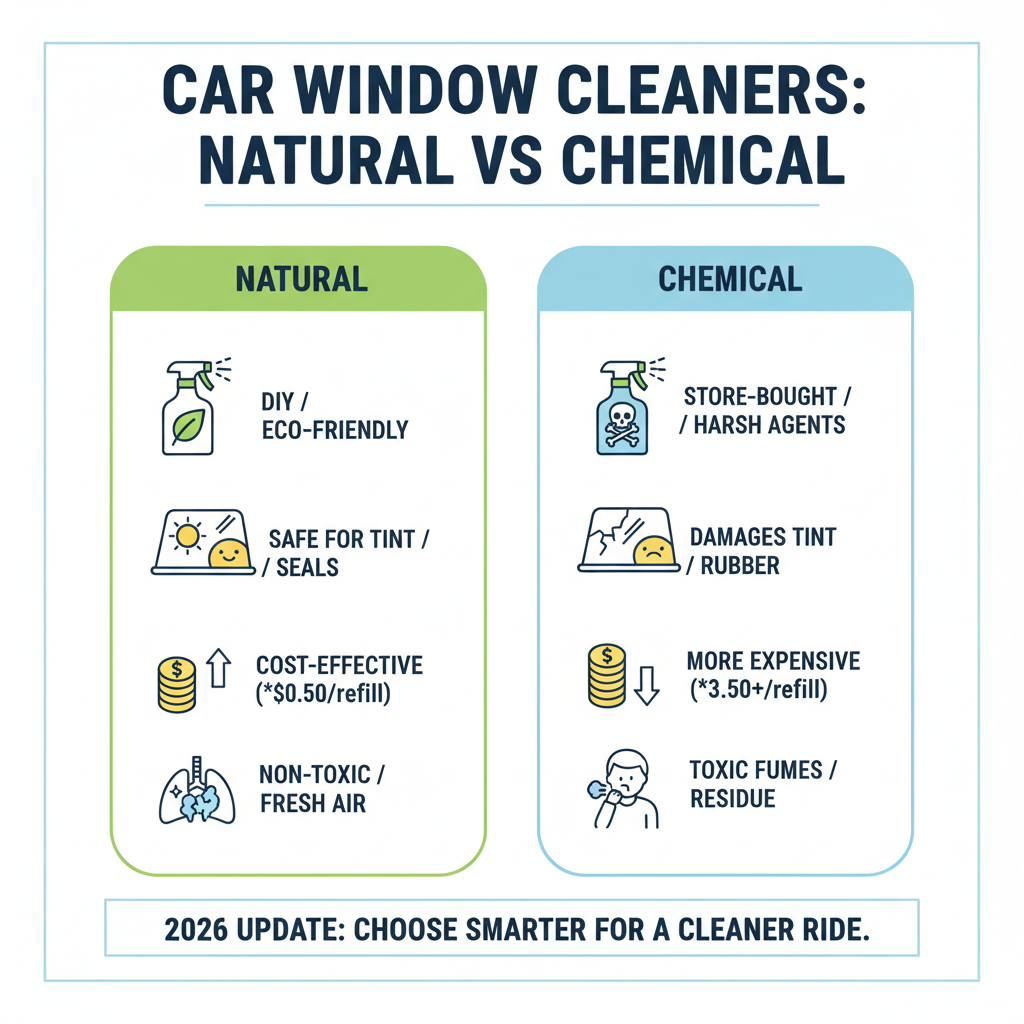
Most commercial glass cleaners contain ammonia and other harsh chemicals. These can irritate your lungs, damage tinted windows, and leave chemical residues in your car — not ideal if you have kids or pets riding along.
The good news? You probably already have everything you need at home.
Homemade versions cost as little as $0.50 per refill, compared to $3.50 or more for an equivalent eco-friendly store-bought cleaner. That’s a significant saving over time, with zero compromise on results.
And it’s not just about money. Conventional cleaners often contain toxins that build up with repeated exposure. Switching to a natural formula means cleaner air inside your car and a smaller environmental footprint.
Why Choose a Natural Glass Cleaner for Car Windows?
When we think about car maintenance, we often focus on oil changes or tire pressure, but the clarity of our glass is a vital safety factor. Choosing a natural glass cleaner for car windows isn’t just a “green” trend; it’s a superior way to maintain your vehicle. Many of us have reached for a bottle of blue liquid under the sink, only to realize later that the sharp, stinging smell is actually a warning sign.
Ammonia, a common ingredient in traditional cleaners like Windex, is a powerful degreaser, but it’s incredibly harsh. It can dry out rubber seals around your windshield and, more importantly, it is the enemy of window tint. If you have aftermarket tint on your car, ammonia will eventually cause it to peel, bubble, or turn a strange shade of purple. By switching to environmentally-friendly window cleaners, you protect the longevity of these expensive upgrades.
Beyond the car itself, there’s the human element. The interior of a car is a small, enclosed space. When you spray chemical cleaners inside, you’re essentially creating a concentrated mist of Volatile Organic Compounds (VOCs). For those of us with sensitive respiratory systems—or what some DIYers call a “sensitive sniffer”—natural alternatives are a breath of fresh air. Using eco-friendly hacks to clean windows ensures that your “new car smell” isn’t replaced by chemical fumes.
Protecting Your Vehicle’s Surfaces
One of the greatest benefits of a natural approach is that the ingredients are biodegradable and non-corrosive. If you accidentally overspray a vinegar-based cleaner onto your dashboard or leather seats, you don’t have to panic about bleaching or melting the material.
Natural cleaners are gentle on the environment too. Every time you wash your car in the driveway, the runoff carries those chemicals into the storm drains and eventually into our local waterways. By using plant-based or pantry-staple ingredients, we ensure that our quest for a clean car doesn’t come at the cost of our local ecosystem.
The Economic Advantage of DIY
Let’s talk numbers. We all love saving money, and the automotive aisle at the grocery store is notoriously overpriced. A high-quality commercial automotive glass cleaner can cost anywhere from $5 to $15 per bottle.
Research shows that a whole bottle of homemade window cleaner (including the cost of a reusable spray bottle) costs about $1.50. Once you have the bottle, refills drop to approximately $0.50. Compare that to the $3.50 you’d pay for a “green” brand at the store, and the savings become clear.
| Ingredient/Product | Estimated Cost per Ounce | Total Bottle Cost (approx. 16oz) |
|---|---|---|
| Store-Bought Eco-Cleaner | $0.22 | $3.50 |
| Name-Brand Automotive Spray | $0.43 | $6.95 |
| DIY Natural Cleaner | $0.03 | $0.50 |
By following a Homemade Car Window Cleaner (No Weird Chemicals) – The Coconut Mama approach, you can make 2-3 times as much cleaner for a total ingredient investment of less than five dollars. It’s a budget-friendly win that keeps your wallet as full as your gas tank.
The Ultimate Recipe for Natural Glass Cleaner for Car Windows
If you’re looking for that professional, crystal-clear finish, you need a recipe that balances cleaning power with fast evaporation. The “Big Three” ingredients for a natural glass cleaner for car windows are distilled water, white vinegar, and isopropyl (rubbing) alcohol.
Why these three?
- Distilled Water: Tap water contains minerals like calcium and magnesium. When tap water evaporates, it leaves those minerals behind as white spots or streaks. Distilled water is pure, ensuring a blank canvas for your glass.
- White Vinegar: This is the workhorse. Vinegar is acidic, which allows it to cut through the alkaline “film” that builds up on the inside of windshields (often caused by plastic off-gassing from the dashboard).
- Isopropyl Alcohol: This is the secret to a streak-free finish. Alcohol evaporates almost instantly, taking the moisture with it before it can form a streak.
To get started, check out this guide on How To Make Natural Car Window Cleaner – Learn The Recipe or try our favorite gleam-and-glisten-natural-glass-cleaner-recipe-for-home for a tried-and-tested ratio.
Essential Ingredients for Natural Glass Cleaner for Car Windows
While the base recipe is fantastic, you can customize your spray to handle specific challenges.
- Cornstarch: It sounds strange, but adding a tablespoon of cornstarch to your mix acts as a very fine, soft abrasive. It helps scrub away “road film” without scratching the glass. Just be sure to shake the bottle well before each use!
- Essential Oils: If you find the smell of vinegar a bit too “salad-like,” essential oils are your best friend. Peppermint oil is a popular choice because it smells incredibly fresh and can even help stimulate concentration while driving. Lime or lemon oils are also excellent for their natural degreasing properties.
- Rubbing Alcohol Boost: In the winter or in high-humidity areas, increasing the alcohol content helps the cleaner dry even faster.
For more inspiration on custom blends, explore these green-cleaning-sprays-for-glass.
Preparation and Storage Tips
Preparation is simple, but a few “pro tips” will make your life easier. Always use a funnel when filling your spray bottle to avoid wasting your ingredients. Once mixed, label your bottle clearly. Not only is this a safety best practice for the household, but it also helps you remember which recipe you liked best.
Regarding storage, homemade cleaners are surprisingly shelf-stable. A vinegar and alcohol-based solution can last up to a year if kept in a cool, dark place. Using distilled water is the most important factor here; it prevents the growth of any bacteria or mold over time. For more on maintaining your supplies, see environmentally-friendly-window-cleaners-2.
Step-by-Step Guide to a Streak-Free Finish
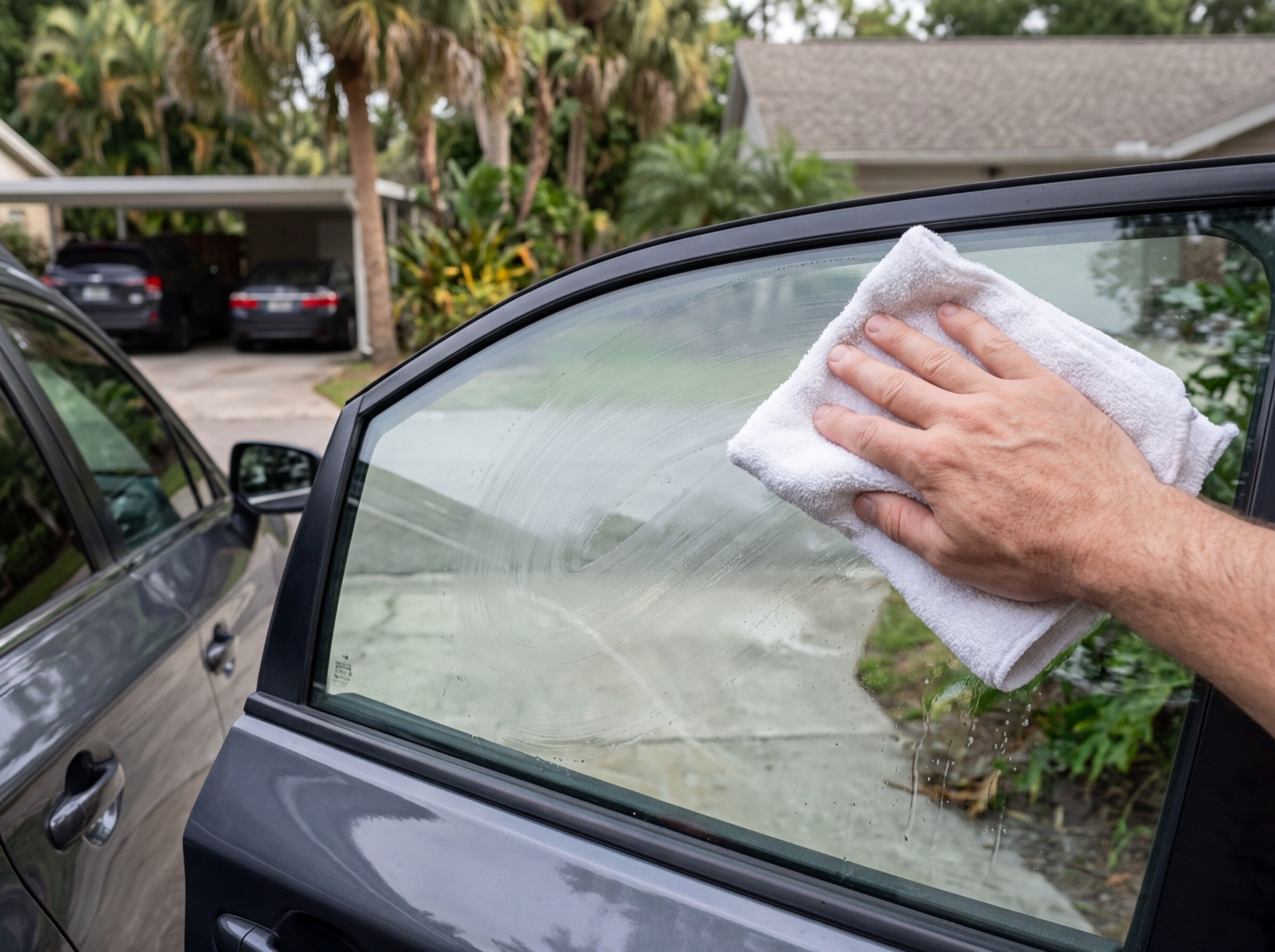
Even the best natural glass cleaner for car windows will fail if your technique is off. The goal is to remove the dirt, not just move it around.
- Work in the Shade: This is the golden rule of car detailing. If the glass is hot from the sun, the cleaner will evaporate the moment it hits the surface, leaving behind streaks and soap spots.
- Dust First: Use a dry microfiber cloth to wipe away loose dust and pollen before you spray. This prevents you from creating a “muddy” smear on the glass.
- The “Box and S” Pattern: Spray the window evenly. Wipe around the perimeter of the glass first (the “box”), then move from the top to the bottom in a continuous “S” motion. This ensures you cover every square inch without redepositing dirt.
- The Final Buff: Use a second, completely dry microfiber cloth to buff the glass. This final pass picks up any microscopic droplets left behind.
For more detailed tips on the best wiping motions, check out these eco-friendly-hacks-to-clean-windows-2.
Applying Your Natural Glass Cleaner for Car Windows
When it comes to tools, forget paper towels. Not only do they create waste, but they often leave behind tiny bits of lint and can even cause micro-scratches on soft window tints.
Instead, invest in high-quality microfiber towels. They are designed to grab dirt and hold onto it. If you’re dealing with the interior windshield—which is notoriously hard to reach—you might consider a pivoting glass cleaning tool with a microfiber head to get into those tight corners where the glass meets the dashboard.
Tackling Tough Road Grime and Stains
Sometimes, a light spray isn’t enough. Car windows face unique challenges like bug splatter, tree sap, and road salt.
- Bugs and Sap: For dried-on organic matter, let your natural cleaner sit on the spot for about 30-60 seconds to soften the bond. If it’s really stubborn, a tiny bit of baking soda on a damp cloth can act as a safe scrub.
- Chicago Winters: In freezing conditions, road salt can create a thick, white haze. The alcohol in our DIY recipe acts as a mild antifreeze, allowing you to clean even when temperatures drop.
- Fingerprints and Vape Residue: Inside the car, oily fingerprints and the “fog” from vaping can be stubborn. A vinegar-heavy mix is best for cutting through these oily films.
Frequently Asked Questions about Natural Car Glass Care
Is natural glass cleaner safe for tinted windows?
Yes! In fact, it is often safer than commercial products. Most window tints are a thin film applied to the inside of the glass. Ammonia-based cleaners will eventually dissolve the adhesive and degrade the film. A natural glass cleaner for car windows made with vinegar and alcohol is ammonia-free and gentle on these films.
How do I prevent streaks in cold weather?
Streaks in winter are usually caused by the cleaner freezing or drying too slowly. To combat this, increase the ratio of isopropyl alcohol in your recipe. Alcohol has a much lower freezing point than water and will help the solution evaporate before it can turn into ice or leave streaks.
Can I use these cleaners on the car interior?
Generally, yes. The vinegar-water-alcohol mix is safe for most hard surfaces in your car, including plastic trim and chrome handles. However, avoid using vinegar on any “unsealed” stone surfaces if you have custom luxury trims. It’s always a good idea to do a small patch test in an inconspicuous area first. Because these recipes are non-toxic, they are much safer for cars that frequently transport pets or children who might touch the windows.
Conclusion
Switching to a natural glass cleaner for car windows is a small change that yields big results. You’ll save money, protect your car’s interior, and breathe easier knowing you aren’t surrounded by harsh chemical fumes. At Delícias Saborosas, we believe that a sustainable lifestyle starts with the everyday choices we make—from the laundry we wash to the cars we drive.
By choosing planet-preserving, progressive products and DIY solutions, you are joining a community of mindful consumers dedicated to a cleaner, greener future. Whether you are scrubbing away road salt from a Chicago winter or just doing a quick touch-up before a road trip, nature has provided all the tools you need for a crystal-clear view.
Explore our full range of natural cleaners and join us in our mission to keep the planet—and your car—sparkling clean!
