
Why Your Laundry Routine Needs a Natural Disinfectant
The best natural disinfectant for washing clothes options you can use right now are:
- White vinegar – Add 1 cup to the rinse cycle to kill bacteria and neutralize odors
- Hydrogen peroxide (3%) – Add 1 cup to the wash cycle as a safe bleach alternative
- Tea tree oil – Add 10 drops to your detergent to fight bacteria, mold, and fungi
- Baking soda – Add ½ cup with detergent to balance pH and reduce residue
- Sunlight (UV) – Line dry clothes in direct sun for at least 30 minutes per side
- Hot water or steam – Wash at 165°F or use a garment steamer to kill up to 99.9% of bacteria
Your laundry might look clean. But looks can be deceiving.
Studies have found that one germy item in the washing machine can spread bacteria to 90% of the other clothes in the same load. And it gets worse – research shows that 44% of home washing machines have tested positive for fecal bacteria, including E. coli and Salmonella.
Most of us reach for bleach when we want to tackle that problem. But bleach is harsh on fabrics, can irritate skin and lungs, and leaves chemical residues on the clothes your family wears every day.
The good news? Nature has some surprisingly powerful alternatives.
This guide walks you through every proven natural method for disinfecting your laundry – what actually works, how to use it, and what to avoid.
Why You Need a Natural Disinfectant for Washing Clothes

We often assume that a quick tumble in the washer with some soap is enough to make our clothes “hygienic.” Unfortunately, science tells a different story. Bacteria are surprisingly resilient. Research indicates that 44% of home washing machines harbor fecal bacteria, such as E. coli and Klebsiella oxytoca. When you throw a single “germy” item—like a kitchen towel or a pair of underwear—into the drum, those pathogens can migrate to 90% of the other items in the load.
This creates a “bacterial soup” that standard detergents, especially when used with cold water, simply cannot sanitize. Furthermore, used hand towels have been found to contain 1,000 times more coliform bacteria than newly purchased ones. In fact, 90% of bathroom towels carry coliform bacteria, and 14% harbor E. coli.
Beyond the “gross factor,” there is a massive environmental incentive to switch to a natural disinfectant for washing clothes. Did you know that 39% of a garment’s total environmental impact comes from its care (washing and drying)? When we use harsh chemical bleaches, we aren’t just wearing those chemicals; we are flushing them into our waterways.
By choosing eco-friendly laundry detergents and natural sanitizers, we reduce our chemical footprint while protecting our families from allergens and skin irritations. It’s about creating a home that is truly clean, not just “chemically masked.”
The Most Effective Ingredients for Natural Laundry Sanitization
If you want to ditch the bleach, you need to know which pantry staples actually pack a punch. While some “hacks” are just myths, others are backed by genuine antimicrobial properties.
| Ingredient | Primary Benefit | Best Use Case |
|---|---|---|
| White Vinegar | Neutralizes odors, kills specific bacteria | Rinse cycle for towels & gym gear |
| Hydrogen Peroxide | Oxidizing disinfectant, whitens | Wash cycle for whites & linens |
| Baking Soda | Balances pH, boosts detergent | Odor removal & softening |
| Tea Tree Oil | Antifungal & antibacterial | Moldy loads & cloth diapers |
| Pine Oil | Broad-spectrum disinfectant | Heavily soiled work clothes |
Hydrogen Peroxide (3%) is a stellar natural disinfectant for washing clothes. It is a natural oxidizer that breaks down into simple water and oxygen, leaving zero toxic residue. It is particularly effective at lifting organic stains and killing bacteria without the harsh fumes of chlorine.
Then we have Tea Tree Oil. This essential oil is a powerhouse. According to research on how tea tree oil disinfects and freshens laundry, it contains compounds that effectively fight fungi and bacteria. If you’ve ever left a load in the washer too long and it smells like mildew, tea tree oil is your best friend. You can even use our mother-earths-secret-eco-friendly-laundry-detergent-recipe/ to incorporate these natural boosters into a DIY routine.
Using White Vinegar as a Natural Disinfectant for Washing Clothes
White distilled vinegar is arguably the most versatile tool in the laundry room. It contains about 5% acetic acid, which is just enough to be tough on germs but gentle on most fabrics.
While vinegar isn’t a “registered disinfectant” by EPA standards for every single virus, it is highly effective against common culprits like E. coli and Salmonella. Its acidity also serves a dual purpose: it dissolves the alkaline soap residue that builds up on towels (making them crunchy and smelly) and acts as a natural fabric softener.
To use it effectively, add 1 cup of white vinegar to the final rinse cycle. This ensures the acid has time to work on the fibers after the detergent has done its job. For more on why this works, check out this guide on what is a natural disinfectant for laundry.
Essential Oils with Antimicrobial Power
Beyond tea tree oil, several other essential oils offer significant antimicrobial benefits. Lavender, eucalyptus, and peppermint are not just for smelling like a spa; they contain phenols and terpenes that inhibit pathogen growth.
- Eucalyptus Oil: Great for work clothes exposed to dust or pollutants.
- Lavender Oil: Perfect for bedding; it’s naturally antibacterial and promotes sleep.
- Peppermint Oil: Provides a crisp scent and helps neutralize odors in socks and activewear.
When you’re making-diy-essential-oil-disinfectant-spray-has-never-been-easier/, you can create a pre-treatment spray to target high-risk areas like underarms or collars before the clothes even hit the machine.
Heat, Steam, and UV: Disinfecting Without Chemicals
Sometimes, the best natural disinfectant for washing clothes isn’t a liquid at all—it’s energy.
Thermal Disinfection: Bacteria thrive between 40°F and 140°F. To truly sanitize laundry using heat, you need water temperatures of at least 165°F. Many modern machines have a “Sanitary Cycle” that maintains this high heat to remove 99.9% of bacteria.
Steam Power: If you have delicate items that can’t handle a hot wash, a garment steamer is a lifesaver. Steam reaches temperatures above 212°F, which neutralizes up to 99.9% of bacteria, viruses, dust mites, and fungi. It’s an excellent way to refresh “dry clean only” items or second-hand finds. You can even enhance the effect by using diy-essential-oil-cleaning-sprays/ after steaming.
Solar Power (UV Radiation): The sun is the world’s oldest disinfectant. Sunlight’s UV rays act as a natural bleaching agent and germ-killer. Hanging your whites in direct sunlight for just 30 minutes per side can significantly reduce surface bacteria. Plus, it’s completely free!
Step-by-Step Instructions for Natural Disinfection
Ready to put these methods into practice? Follow these steps for a germ-free load:
- Sort and Prep: Separate high-risk items (underwear, towels, gym clothes) from everyday wear. Do not “shake” dirty laundry, as this can disperse germs into the air.
- Pre-Treat: For heavily soiled items, spray a mixture of water and tea tree oil or hydrogen peroxide on stains.
- Select Temperature: Use the hottest water setting safe for the fabric. For towels and sheets, 140°F-165°F is ideal.
- Add Your Booster:
- For whites: Add 1 cup of 3% hydrogen peroxide to the wash cycle.
- For odors/softening: Add 1 cup of white vinegar to the rinse cycle dispenser.
- For deep sanitization: Add 10-15 drops of tea tree or eucalyptus oil directly to your eco-friendly detergent.
- Dry Immediately: Don’t let wet clothes sit in the machine. Dry them on high heat or hang them in the sun to finish the disinfection process.
For more detailed recipes for the whole house, see our guide on natural-disinfectants-for-home/.
Best Practices for a Natural Disinfectant for Washing Clothes
- Test First: Always test essential oils or peroxide on an inconspicuous corner of colored fabrics.
- Don’t Mix Chemicals: Never mix vinegar and hydrogen peroxide in the same container; they can create peracetic acid, which is irritating to the skin and lungs.
- Focus on High-Risk Items: Pay extra attention to workout gear and kitchen towels. 14% of towels have been found to harbor E. coli. These items should always get a “boosted” wash.
Safety Precautions and Fabric Care
While natural methods are generally safer, “natural” doesn’t always mean “indestructible.”
- Hydrogen Peroxide: While safer than bleach, it is still an oxidizer. Overusing it on dark colors can cause gradual fading. Use it primarily for whites or light-colored linens.
- Vinegar: Its acidity can eventually degrade the rubber seals and hoses in some washing machines if used in massive quantities every single day. Stick to 1 cup per load.
- Essential Oils: Ensure you are using 100% pure oils. Synthetic “fragrance oils” do not have antimicrobial properties and may leave oily stains on delicate silks or wools.
- Lemon Juice: A great natural whitener, but like peroxide, it can bleach colors if left in the sun too long.
Frequently Asked Questions about Natural Laundry Disinfection
Does vinegar kill all germs in the wash?
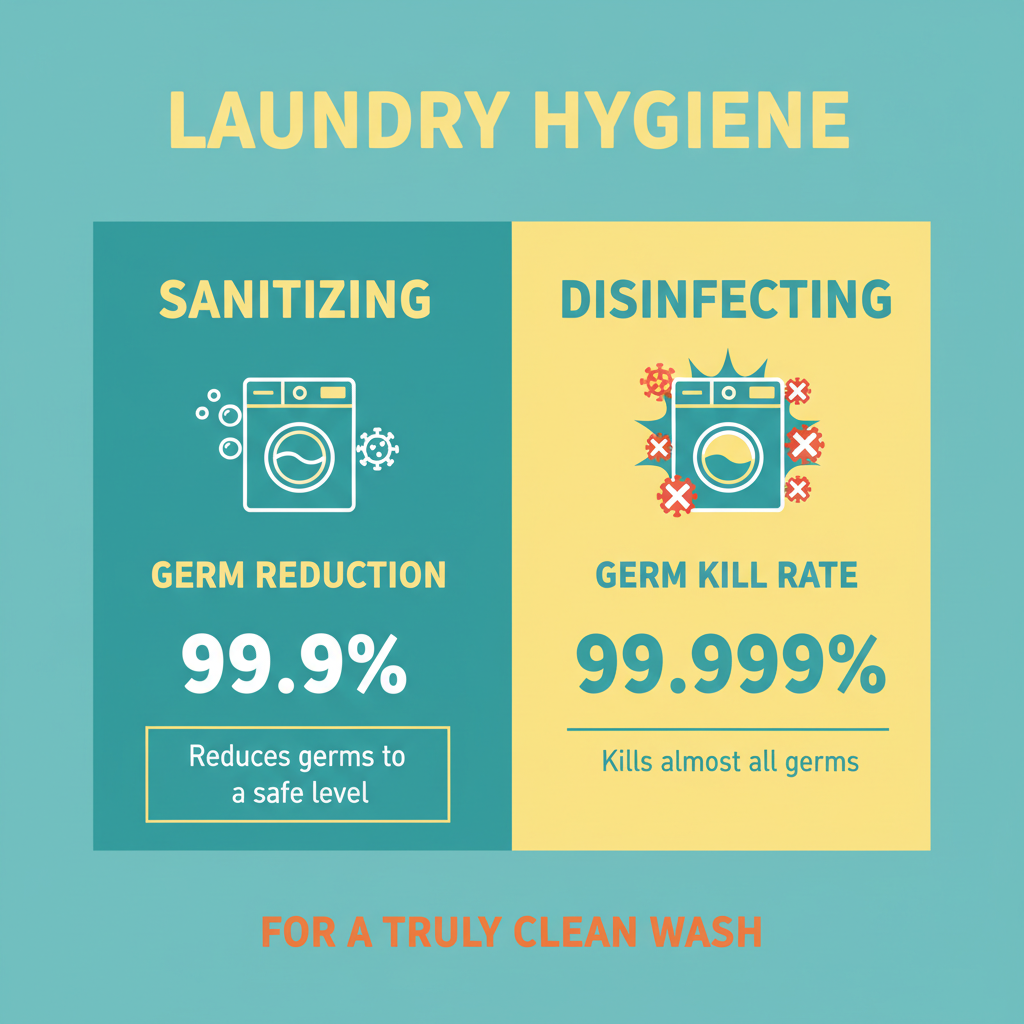
Not quite. While vinegar is a fantastic natural disinfectant for washing clothes against common bacteria like E. coli and Salmonella, it does not meet the EPA’s strict 99.999% kill rate required for hospital-grade disinfection. It is a “sanitizer” rather than a “disinfectant” in the clinical sense. However, for a standard healthy household, it is usually more than sufficient.
Can I disinfect clothes in the freezer?
Yes, but with caveats. Freezing clothes in an airtight bag overnight is great for killing odor-causing bacteria and dust mites, especially in denim or delicate synthetics. However, some bacteria simply go dormant in the cold and “wake up” once the garment warms up. Use this for refreshing clothes, but don’t rely on it if someone in the house has a contagious virus.
How often should I sanitize my towels and bedding?
Towels should be washed after 3-5 uses—and they must be allowed to dry completely between uses. If a household member is sick, sanitize their linens after every use to prevent cross-contamination.
Conclusion
At Delícias Saborosas, we believe that a clean home shouldn’t come at the cost of a clean planet. Transitioning to a natural disinfectant for washing clothes is one of the simplest ways to protect your family’s health while reducing your environmental footprint. Whether you are using the power of the sun, the acidity of vinegar, or the antimicrobial strength of tea tree oil, you are making a choice that preserves both your fabrics and our waterways.
Ready to upgrade the rest of your cleaning routine? Discover more natural cleaners for your home and join us in the movement toward a more sustainable, chemical-free lifestyle. Together, we can keep the germs away—the natural way!
