
Why Travertine Requires a Specialized Cleaning Approach
To understand why your patio needs the best cleaner for outdoor travertine, we first have to look at what this stone actually is. Travertine is a form of terrestrial limestone deposited by mineral springs, especially hot springs. It has a distinctively high concentration of calcium carbonate.
Because it is a sedimentary rock formed by the rapid precipitation of calcium carbonate, it is naturally alkaline. This is the “science-y” reason why you have to be so careful. When an acid (like vinegar or lemon juice) touches an alkaline stone (like travertine), a chemical reaction occurs. This reaction is called etching. It literally eats away at the surface of the stone, leaving behind dull, whitish marks that look like water rings but are actually permanent physical damage.
Furthermore, travertine is categorized by its “fill.”
- Unfilled Travertine: This has natural pits and holes left open. While it looks incredibly rustic and beautiful, those holes are magnets for dust, leaf tannins, and moisture.
- Filled Travertine: The holes are filled with a color-matched resin or cement during processing to create a smoother surface.
Regardless of the fill, the stone remains porous. Without the right cleaning approach, moisture absorption can lead to efflorescence—that powdery white salt crust that rises to the surface—or worse, structural cracking during freeze-thaw cycles in colder climates.
Finding the best cleaner for outdoor travertine
When we go hunting for the best cleaner for outdoor travertine, we are looking for three “Golden Rules”: it must be pH-neutral, non-acidic, and non-abrasive. Most all-purpose cleaners sitting under your kitchen sink fail at least two of these tests. They are often either too acidic (to cut through lime) or too alkaline/bleach-heavy (to kill germs), both of which can strip the sealer right off your stone.
| Feature | pH-Neutral Stone Cleaner | Common Acidic Cleaners (Vinegar/Lemon) |
|---|---|---|
| pH Level | 7.0 (Balanced) | 2.0 – 3.0 (Highly Acidic) |
| Effect on Stone | Lifts dirt without reaction | Chemically etches/dissolves stone |
| Sealer Safety | Preserves protective barrier | Strips sealer immediately |
| Residue | Usually streak-free | Can leave sticky films |
| Best For | Daily and deep cleaning | Salad dressings (not patios!) |
best cleaner for outdoor travertine: Safe DIY Ingredients
You don’t always need a fancy bottle from a specialty store. In fact, some of the most effective tools for a “green” home are already in your pantry. We love these options because they align with our mission of using non-toxic-floor-cleaning-solutions that won’t harm your garden or your pets.
- Isopropyl Alcohol (Rubbing Alcohol): This is a fantastic “secret weapon.” It has a neutral pH and evaporates quickly, which prevents water spots. A mixture of 1/2 cup of alcohol per quart of water creates a disinfecting cleaner that leaves a streak-free shine.
- Baking Soda: Because it is mildly alkaline, it is safe for travertine. It works wonders as a gentle abrasive for scrubbing or as a base for a stain-pulling poultice.
- Hydrogen Peroxide: A 3% solution is generally safe for organic stains like moss or food spills. It acts as a mild whitener without the destructive power of chlorine bleach.
best cleaner for outdoor travertine: Commercial Standards
If you prefer a ready-made solution, look for commercial standards that prioritize “residue-free” and “non-abrasive” formulas. When browsing OUTDOOR CLEANERS, check the label specifically for natural stone compatibility.
The best commercial cleaners act like a “liquid sponge.” Instead of just moving dirt around, they are designed to penetrate the pores, encapsulate the oil or grime, and lift it to the surface where it can be wiped away. This prevents the “aging” of oils inside the stone, which can lead to dark spots and bacterial growth over time.
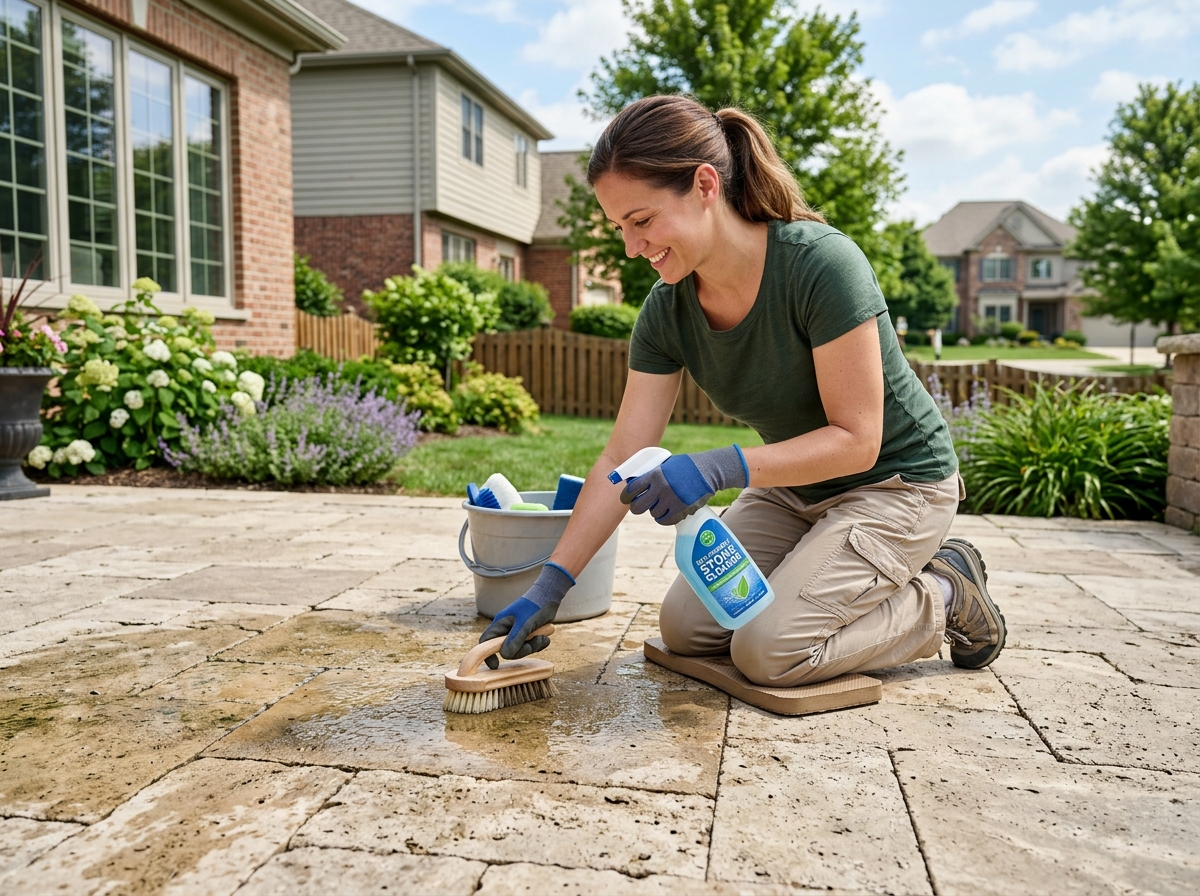
Step-by-Step Guide to Routine and Deep Cleaning
Cleaning your patio shouldn’t feel like a “Hercules task.” By following a consistent routine, you ensure that dirt never has the chance to settle deep into those travertine pores.
Step 1: Debris Removal
Before any water touches the stone, you must remove loose grit. Sand and dirt act like sandpaper under your shoes, scratching the finish. Use a soft-bristle broom or even a leaf blower to clear the area. We recommend green-hacks-for-cleaning-hardwood-floors techniques here: always work from the perimeter inward to ensure you don’t miss any corners.
Step 2: The Gentle Rinse
Give the patio a light misting with a garden hose. This cools the stone (especially important in summer) and loosens surface dust. Avoid high pressure at this stage; you just want the stone damp.
Step 3: The Wash
Mix your best cleaner for outdoor travertine (either a commercial stone soap or a mild dish soap/water mix) in a bucket of warm water. Use a soft-bristle scrub brush or a microfiber mop to apply the solution. Work in small sections—about 10ft by 10ft—to ensure the soap doesn’t dry on the stone.
Step 4: Final Rinse and Dry
Rinse thoroughly with fresh water. If you leave soap behind, it will create a dull film that actually attracts more dirt. For the absolute best finish, use a large microfiber cloth or a squeegee to dry the surface. This prevents “hard water” mineral deposits from forming white spots.
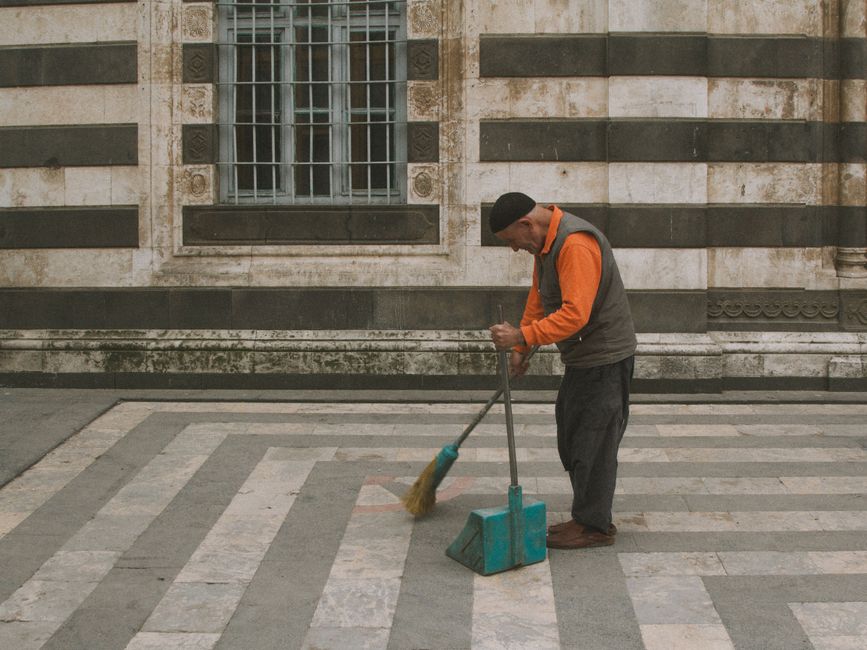
Removing Stubborn Stains: The Poultice Method
Sometimes a simple wash isn’t enough. If you’ve had a BBQ mishap or a pile of wet leaves has left a dark tannin stain, you need a “poultice.” A poultice is a thick paste that draws the stain out of the stone and into the paste as it dries.
How to make and use a travertine poultice:
- Identify the stain: Use baking soda for oil/grease; use hydrogen peroxide mixed with baking soda for organic stains (leaves, mold).
- Mix the paste: Combine your ingredient with a little water until it reaches the consistency of peanut butter.
- Apply: Spread the paste over the stain about 1/4 inch thick.
- Cover: Place plastic wrap over the paste and tape down the edges. Poke a few small holes in the plastic to allow for very slow evaporation.
- Wait: Let it sit for 24 to 48 hours. As the paste dries, it literally “pulls” the stain out of the stone’s pores.
- Remove: Scrape the dry paste off with a plastic spatula (never metal!), rinse with water, and dry.

Essential Maintenance: Sealing and Protection
Even the best cleaner for outdoor travertine can’t do its job if the stone is “naked.” Because travertine is so thirsty, it needs a penetrating sealer to act as a hidden barrier.
We recommend a high-quality penetrating sealer (also called an “impregnator”). Unlike topical sealers that sit on top and make the stone slippery, penetrating sealers go deep into the pores. This keeps liquids on the surface, giving you time to wipe up a spill before it becomes a permanent mark.
- Frequency: Most outdoor travertine should be resealed every 1-2 years. If your patio is around a salt-water pool or gets heavy rain, an annual application is safer.
- The Water Test: Not sure if you need to seal? Pour a tablespoon of water on a few different pavers. If the water beads up, your sealer is still working. If it soaks in and turns the stone dark within a minute, it’s time for a fresh coat.
Proper sealing is the best way to prevent efflorescence and weed growth. For more tips on protecting your home’s surfaces, check out our green-tips-for-maintaining-wooden-furniture, as many of the same “gentle-first” principles apply to stone.
Frequently Asked Questions about Outdoor Travertine
Can I use a pressure washer on travertine?
Yes, but proceed with extreme caution! Travertine is a relatively soft stone. If the pressure is too high (above 1500 PSI) or the nozzle is too close, you can “spall” the stone, causing the surface to flake off. Always use a wide fan tip, keep the wand at least 12 inches away, and be prepared to reseal the stone immediately afterward, as pressure washing strips away protective coatings.
Why should I avoid vinegar and bleach?
Vinegar is acetic acid. It will react with the calcium in the travertine and create a permanent “etch” mark. Bleach is highly alkaline and can be too harsh, potentially discoloring the stone and killing the surrounding grass or plants. Stick to the best cleaner for outdoor travertine—a pH-neutral formula—to keep your patio and your garden safe.
How do I prevent weeds and mold?
Prevention is all about moisture and debris management.
- Weeds: Ensure your paver joints are filled with polymeric sand, which hardens to prevent seeds from taking root.
- Mold/Mildew: These thrive in damp, shaded areas. Trim back overhanging bushes to improve airflow and sunlight.
- Sweeping: Regular seasonal sweeping removes the organic matter (leaves, dirt) that mold uses as food.
Conclusion
At Delícias Saborosas, we believe that a beautiful home shouldn’t come at the cost of the planet. Maintaining your outdoor space with the best cleaner for outdoor travertine is a perfect example of this philosophy in action. By choosing pH-neutral, non-toxic, and biodegradable solutions, you aren’t just protecting your patio—you’re protecting the groundwater, your pets, and your family.
Travertine is a timeless investment. It has been used in architecture for thousands of years (just look at the Colosseum!). With a little bit of regular sweeping, a gentle pH-neutral wash, and a fresh seal every couple of years, your patio will remain a stunning centerpiece of your home for decades to come.
Ready to transition to a cleaner, greener lifestyle? More info about sustainable cleaning can help you find progressive products for every part of your home, from the laundry room to the backyard patio. Let’s keep things beautiful, naturally.
