
Your Laundry Routine Is Leaving a Bigger Footprint Than You Think
A biodegradable laundry fabric softener breaks down naturally after use — unlike conventional softeners that leave chemical residues in waterways, on your clothes, and inside your washing machine.
Quick answer — top biodegradable fabric softener types to know:
| Format | Best For | Key Benefit |
|---|---|---|
| Eco-strips | Zero plastic waste | Lightweight & pre-measured (up to 64 loads) |
| Liquid (plant-based) | Everyday families | High-capacity (up to 100+ loads) |
| Vinegar-based | Sensitive skin & babies | Naturally removes mineral buildup |
| Refill system | Cutting plastic waste | Reduces plastic use by 60%+ |
| Certified biobased liquid | Eco-label shoppers | High percentage of biobased content (up to 84%) |
Most conventional fabric softeners are made with tallow (animal fat) and synthetic chemicals. They coat your clothes in a film that feels soft — but that film ends up rinsed into water systems, where it doesn’t break down easily.
For parents who care about what touches their family’s skin, and what goes down the drain, that’s a real problem.
The good news? Plant-based, biodegradable alternatives have come a long way. Ingredients like cotton seed extracts, sugar cane vinegar, and fermentation-derived bio-surfactants now deliver genuinely soft, static-free laundry — without the plastic jug or the chemical hangover.
And the format options have expanded too. You can now choose strips, refillable liquids, or concentrated bottles — many of them fragrance-free, septic-safe, and gentle enough for newborns.

The Science Behind Biodegradable Laundry Fabric Softener
When we talk about science in the laundry room, we usually think of “stain-fighting power.” But for a biodegradable laundry fabric softener, the science is all about how a product exits your home. Traditional softeners often rely on petroleum-based chemicals or animal-derived tallow (rendered fat) to coat fibers. While these make clothes feel slippery, they are not “readily biodegradable,” meaning they linger in the environment long after your rinse cycle ends.
In contrast, eco-friendly softeners utilize plant-derived molecular structures. These molecules are designed to perform their softening job and then break down into harmless components like water and carbon dioxide. Many of these products carry the USDA Biobased Certification, which verifies the percentage of renewable biological ingredients in the formula. For example, some leading liquid options are certified at 84% biobased content.
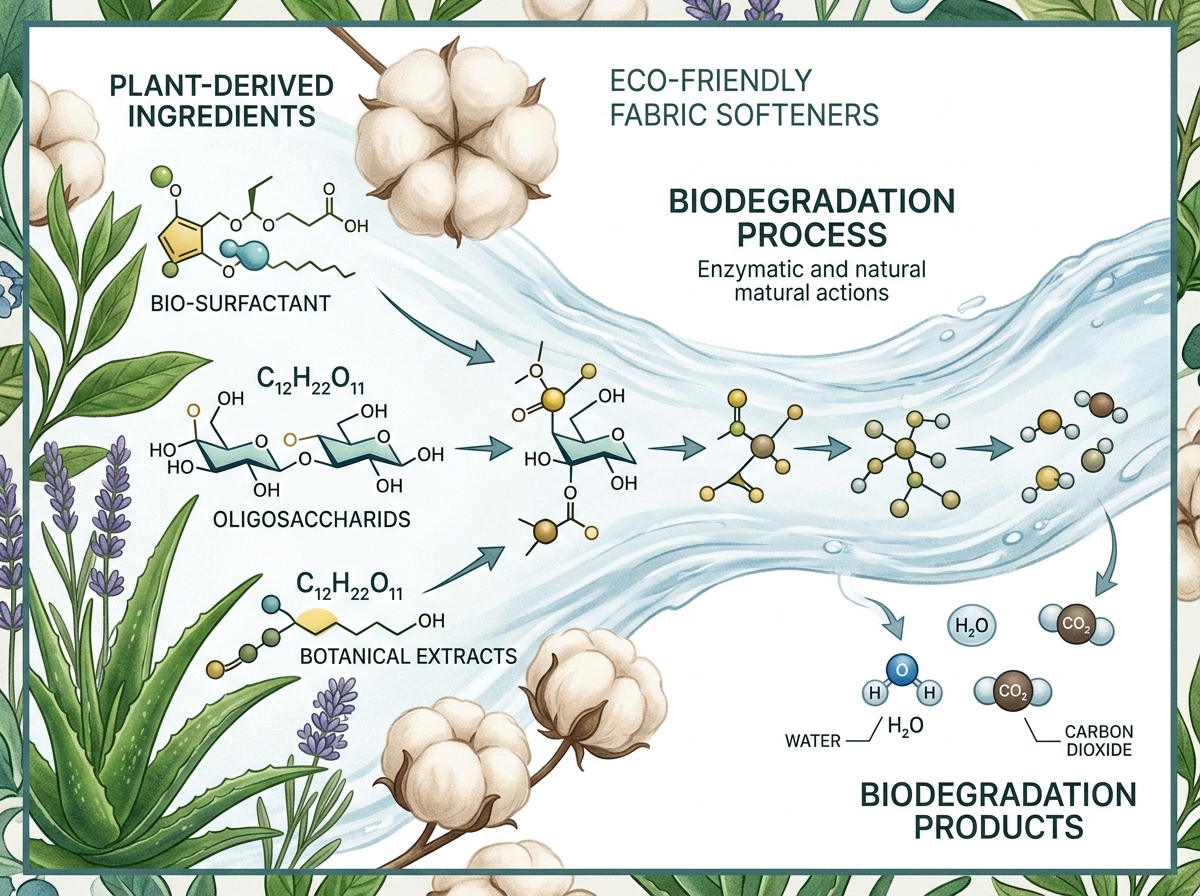
One of the most fascinating advancements in this field is the use of Soforo. This is a bio-surfactant produced through a natural fermentation process using yeast, sugar, and palm oil. Unlike synthetic surfactants, Soforo is a planet-preserving ingredient that provides a powerful clean and soft finish while remaining completely non-toxic and phosphorus-free. This shift in chemistry is a perfect companion to eco-friendly laundry detergents, creating a laundry routine that respects both your clothes and the Earth.
Key Ingredients in Biodegradable Laundry Fabric Softener
What exactly is inside that eco-friendly bottle or strip? To understand how these products work, we have to look at the “green” chemistry involved. Instead of harsh synthetic fragrances and dyes, manufacturers are turning to nature’s pantry.
- Cotton Seeds: Some plant-based softeners use extracts from cotton seeds to condition fibers naturally.
- Sugar Cane Vinegar (Acetic Acid): This is a powerhouse ingredient. It helps loosen mineral buildup (like calcium and magnesium) and soap residue from fabrics, which naturally softens them without leaving a greasy film.
- Soybean and Corn-derived Agents: These plant oils are processed into “esterquats,” which provide the lubrication needed to reduce static and friction between fibers.
- High-Purity Water: Many premium brands use charcoal-filtered, reverse osmosis, or UV-sanitized water to ensure no contaminants interfere with the softening process.
- Essential Oils: For those who love a scent, natural oils like lavender, rosemary, or lemon verbena provide a refreshing aroma without the respiratory irritation often caused by synthetic “parfum.”
For those interested in the deeper technical side, scientific research on biodegradable surfactants shows that these plant-based alternatives significantly reduce the toxicity levels in our greywater compared to traditional chemical formulations.
Performance of Biodegradable Laundry Fabric Softener
A common myth is that “natural” means “less effective.” However, modern biodegradable laundry fabric softener options are specifically engineered to match or beat the performance of old-school brands. They excel at fiber conditioning, which keeps your favorite cotton t-shirts from feeling like cardboard after a few washes.
By neutralizing the electrical charge on the surface of the fabric, these plant-based agents are highly effective at static reduction. They also help in wrinkle prevention by lubricating the fibers so they don’t bunch up as tightly during the spin cycle.
Table: Plant-Based Softening vs. Traditional Tallow Softeners
| Feature | Plant-Based (Biodegradable) | Traditional (Animal Tallow) |
|---|---|---|
| Base Ingredient | Cotton seed, Soy, or Vinegar | Rendered animal fat (Tallow) |
| Residue | Zero to minimal; keeps machines clean | Waxy buildup; can clog HE sensors |
| Absorbency | Maintains towel absorbency | Can make towels less absorbent over time |
| Skin Irritation | Low; hypoallergenic options | Higher risk due to dyes/synthetic scents |
| Environmental Impact | Breaks down in 28 days or less | Persistent in water systems |
Environmental and Health Benefits of Eco-Friendly Softening
The environmental toll of traditional laundry is staggering. Did you know that switching to a product like biodegradable fabric softener strips helps keep millions of plastic jugs out of landfills every single year? That is a massive reduction in plastic waste. Furthermore, many of these brands prioritize carbon-neutral shipping and zero-waste packaging, often using recyclable paper envelopes instead of heavy plastic containers.
From a health perspective, the benefits are just as clear. Conventional softeners are often loaded with phthalates and parabens. Biodegradable options are typically hypoallergenic and 100% biodegradable. For homes with specialized plumbing, being “septic safe” is a non-negotiable requirement. Because these products lack phosphates and harsh antibacterial chemicals, they don’t kill the beneficial bacteria needed for a septic system to function correctly.
Choosing a biodegradable laundry powder alongside a natural softener ensures that your entire washing process is free from toxins that could irritate sensitive skin or harm local ecosystems.
Top Product Formats for Sustainable Laundry
The market for sustainable laundry has exploded with innovation, offering formats that fit every lifestyle. Whether you are a minimalist living in a small apartment or a large family doing ten loads a week, there is a biodegradable laundry fabric softener for you.
- Eco-Strips: These are the ultimate space-savers. They are self-dissolving strips that you simply toss into the drum. They eliminate the mess of measuring and the weight of liquid bottles. A 32-load pack often comes in a tiny cardboard envelope.
- Concentrated Liquids: Concentrated plant-based liquids offer high-capacity bottles—often providing over 100 loads per container—which reduces the frequency of shipping and packaging waste.
- Vinegar-Based Formulas: Vinegar-based formulas use the natural power of acetic acid. These are excellent for removing odors and “stripping” old detergent buildup from clothes.
- Refill Systems: Sustainable brands have pioneered refill pouches that use over 60% less plastic than standard bottles. You pour the refill into a permanent glass or BPA-free dispenser, significantly cutting your long-term plastic footprint.
- Fragrance-Free Options: For the most sensitive users, fragrance-free strips or liquids provide all the softening benefits with zero risk of scent-based irritation.
If you are feeling adventurous, you can even explore a mother-earths-secret-eco-friendly-laundry-detergent-recipe to pair with your chosen softener for a truly DIY, eco-conscious clean.
How to Use Biodegradable Softeners in Any Machine
Using a biodegradable laundry fabric softener isn’t complicated, but there are a few tips to ensure you get the best results without wasting product.
- High-Efficiency (HE) Machines: These machines use very little water, so concentration is key. For most HE and top-load washers, a small dosage of about 1/8 cup is all you need. Overloading the dispenser can lead to wasted product.
- Dispenser Usage: Most liquid biodegradable softeners go exactly where the old ones did—in the dedicated softener tray. If your machine doesn’t have one, you can use a dispenser ball or wait for the rinse cycle to add it manually.
- Eco-Strips: These are the easiest to use. Simply tear off one strip and toss it into the bottom of the drum before adding your clothes. They are designed for cold water solubility, so they’ll dissolve completely even in eco-wash settings.
- Machine Maintenance: One of the “hidden” benefits of vinegar-based or plant-based softeners is that they actually help with mineral buildup removal. While traditional softeners create a “scrub” (a waxy buildup of soap and fat), biodegradable options help keep your machine’s internal parts clean and smelling fresh.
Frequently Asked Questions about Biodegradable Softeners
Are biodegradable softeners safe for babies and sensitive skin?
Absolutely. In fact, they are often the best choice for babies. Many conventional softeners leave a chemical residue that can cause “contact dermatitis” on a newborn’s delicate skin. Biodegradable, hypoallergenic, and fragrance-free options provide natural softening without the harsh residues. They are also highly recommended for cloth diapers, as they won’t create the waxy buildup that causes diapers to lose their absorbency.
Can these products be used with septic systems?
Yes. Septic systems rely on a delicate balance of bacteria to break down waste. Traditional softeners containing heavy surfactants and antibacterial agents can disrupt this balance. A biodegradable laundry fabric softener is designed for rapid breakdown and is phosphate-free, making it completely water-safe for eco-friendly drainage systems.
Do biodegradable options effectively reduce static and wrinkles?
Yes, they do! By using plant-based conditioning agents like soybean oil or cotton seed extracts, these products provide fiber lubrication. This natural softening process makes fabrics more flexible, which reduces the friction that causes static (especially in dry weather) and helps prevent deep wrinkles from setting in during the spin and dry cycles. As a bonus, many users find that these softeners also help with pet hair reduction and lint prevention because the clothes are less “magnetic” to debris.
Conclusion
At Delícias Saborosas, we believe that a clean home shouldn’t come at the cost of a clean planet. Transitioning to a biodegradable laundry fabric softener is one of the easiest steps you can take toward a sustainable laundry routine. Whether you choose the convenience of eco-strips or the bulk savings of a 101-load plant-based liquid, you are making a choice that supports a plastic-free future.
With some brands boasting over 4,000 positive reviews and offering up to 15% subscription savings, it has never been more affordable or effective to go green. Ready to make the switch? Explore our curated selection of natural cleaners and start your journey toward a more mindful, progressive home today. Your clothes—and the Earth—will thank you!
