
Why Your Cleaning Cabinet Might Be Harming Your Family
A homemade household cleaner is one of the simplest, safest swaps you can make for your family — and it takes less than five minutes to put together.
Quick answer: Here’s how to make a basic all-purpose homemade cleaner:
- Add 1 cup distilled white vinegar to a glass spray bottle
- Add 1 cup distilled water
- Drop in 10-15 drops of essential oil (lemon, tea tree, or lavender)
- Shake well before each use
- Store in a cool, dark place — lasts 3-6 months with distilled water
That’s it. No harsh chemicals. No mystery ingredients. No $8 spray bottle.
Here’s the uncomfortable truth: that bottle of “natural” kitchen cleaner you’ve been reaching for? It may not be as clean as it looks.
Many store-bought cleaners — even ones with green labels and leaf logos — contain ingredients like phthalates, triclosan, and synthetic fragrances that can hide dozens of undisclosed chemicals. These have been linked to hormone disruption, allergies, and antibiotic resistance.
This is sometimes called “greenwashing” — when a product’s packaging implies it’s safe or eco-friendly, but the ingredient list tells a different story.
If you’re trying to reduce your family’s exposure to chemical residues and cut down on plastic waste, making your own cleaner isn’t just a fun DIY project. It’s a genuinely smarter choice.

The Science and Savings of a Homemade Household Cleaner
We often hear skeptics ask: “But do they actually work?” The answer is a resounding yes, and the science backs it up. The hero of most DIY recipes is white distilled vinegar. Its high acetic acid content makes it a powerhouse for dissolving mineral deposits and cutting through grease. In fact, research shows that acetic acid is effective at killing a wide range of household bacteria and even some viruses.
Beyond the science, the economics are staggering. While a “natural” store-bought spray can set you back $5 to $8, a homemade household cleaner costs literal pennies. We’ve found that one large bottle of castile soap or a gallon of vinegar can produce dozens of batches of cleaner. For example, a 32-ounce bottle of castile soap can make nearly 50 bottles of all-purpose spray!
However, it isn’t just about the liquid inside. We strongly recommend using glass spray bottles rather than reusing old plastic ones. Essential oils, which provide both scent and antimicrobial properties, can actually degrade plastic over time, causing chemicals to leach into your cleaning solution. Glass is inert, infinitely reusable, and looks much nicer on your counter!
If you are looking for a heavy-duty option, Hydrogen peroxide (3%) is an EPA-listed sterilizer that is incredibly effective against mold, mildew, and fungus. It’s a fantastic alternative for those who don’t love the smell of vinegar.
Essential Ingredients for Your Cleaning Pantry
To get started, you don’t need a lab; you just need a few pantry staples. We recommend keeping these items on hand:
- White Distilled Vinegar: The ultimate degreaser and descaler.
- Baking Soda: A mild abrasive that deodorizes and helps scrub away stuck-on food.
- Castile Soap: A plant-based surfactant that lifts dirt (we love the peppermint or citrus versions).
- Washing Soda: Stronger than baking soda, this is a heavy-duty alkaline cleaner for grease.
- Borax: A natural mineral that boosts cleaning power (best used for floors and bathrooms).
- Distilled Water: The secret to a long shelf life.
- Essential Oils: For natural fragrance and added “oomph.”
Why Distilled Water Matters for Longevity
You might be tempted to just turn on the tap, but we urge you to reconsider. Tap water contains minerals and tiny amounts of bacteria. While safe for drinking, these impurities can cause your homemade household cleaner to go “off” or develop mold within just two weeks.
By using distilled water, you ensure your mixture stays pure. A vinegar-based spray made with distilled water can last 3 to 6 months, whereas a tap-water version should be used within 14 to 30 days. It’s a small investment that makes your DIY efforts much more sustainable.
Step-by-Step: Your Go-To Homemade Household Cleaner Recipe
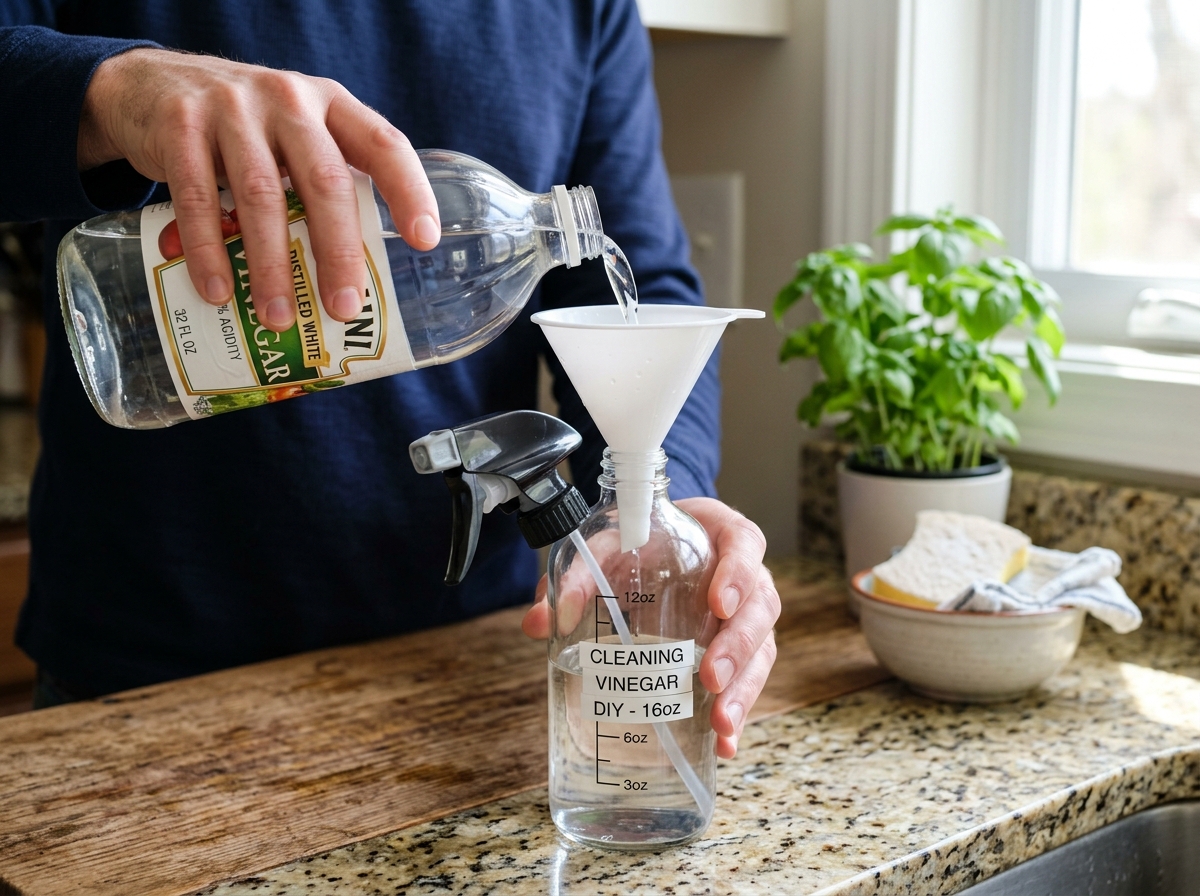
Ready to mix? This is our favorite “set it and forget it” recipe. It takes about two minutes to prep and yields a standard 16-ounce bottle.
The “Everything” Spray Recipe:
- 1 ½ cups distilled water
- ½ cup white distilled vinegar
- 15 drops of your favorite essential oil
Instructions:
- Place a funnel in the neck of your 16-ounce glass bottle.
- Pour in the water first, then the vinegar. (Adding water first prevents the vinegar from splashing).
- Carefully drop in your essential oils.
- Remove the funnel, screw on the spray top, and give it a gentle swirl.
- Label your bottle with the date and ingredients.
For more variations on this classic, check out this Simple DIY Recipe That Works. Remember to always shake the bottle before you spray, as the oils will naturally float to the top over time.
How to Properly Mix Vinegar and Baking Soda
We’ve all seen the elementary school volcano: vinegar meets baking soda, and fizz! While that carbon dioxide reaction is fun to watch, it’s also a mechanical cleaning tool. The bubbling action helps physically lift and loosen grime from surfaces.
However, once the fizzing stops, you are essentially left with saltwater. To use these two together effectively, we recommend sprinkling baking soda directly onto a greasy stovetop or sink first, then spraying your vinegar cleaner on top. Scrub while it’s bubbling to get the maximum “elbow grease” benefit!
Best Essential Oils for Scent and Sanitization
Essential oils do more than just make your house smell like a spa; they bring their own chemical properties to the party.
- Tea Tree Oil: Known for its powerful antifungal and antibacterial properties.
- Lemon and Orange: Excellent for cutting through sticky residues and grease.
- Lavender: Naturally calming and has mild antimicrobial benefits.
- Peppermint: Great for a fresh “clean” scent and can even deter ants and spiders.
A note on pet safety: If you have furry friends, be cautious. Tea tree oil, in particular, is toxic to pets in high concentrations. However, when diluted at a ratio of 500:1 (like 10 drops in a large bottle of water), it is generally considered safe for surface cleaning. Always let the surface dry before letting your pets roam!
Surface Safety: Where to Use (and Avoid) Vinegar-Based Sprays
Vinegar is amazing, but it is an acid. This means it isn’t a “one size fits all” solution.
| Safe Surfaces | Surfaces to Avoid |
|---|---|
| Sealed Tile & Grout | Natural Stone (Marble, Granite, Quartz) |
| Glass & Mirrors | Hardwood Floors (can dull the finish) |
| Stainless Steel | Electronics (screens and internal parts) |
| Laminate Countertops | Cast Iron & Aluminum (can cause pitting) |
| Porcelain Sinks | Unsealed Grout |
Because vinegar is food-safe, it is our favorite choice for the inside of the refrigerator, microwave interiors, and high-chair trays. It leaves a streak-free shine on windows and glassware that puts blue-dyed commercial sprays to shame.
Surfaces to Avoid with Acidic Cleaners
If you have beautiful granite or marble countertops, keep the vinegar far away! The acid can “etch” the stone, leaving behind dull, permanent white spots. For these surfaces, a pH-neutral cleaner is required.
Similarly, avoid using vinegar on hardwood floors or furniture. Over time, the acid can eat away at the protective wax or polyurethane finish, leaving your wood looking thirsty and dull. For these areas, we recommend a castile soap-based cleaner instead.
Advanced DIY: Customizing Your Homemade Household Cleaner for Every Room
Once you’ve mastered the basic spray, you can start getting creative. One of our favorite “homesteading” hacks is to infuse your vinegar. Instead of using essential oils, fill a mason jar with orange peels or pine needles and cover them with white vinegar. Let it sit in a dark cupboard for two to four weeks.
The result? A citrus or pine-scented concentrate that smells like a forest rather than a pickle jar. Strain the liquid and use it as your vinegar base in any recipe.
Creating a Heavy-Duty Bathroom Scrub
For soap scum and bathtub rings, a spray isn’t enough. You need grit.
- The Scrub: Mix ½ cup baking soda with enough liquid castile soap to make a paste (it should look like frosting).
- The Use: Slather it on the tub, let it sit for 10 minutes, then scrub and rinse. It’s effective, non-toxic, and won’t irritate your lungs while you’re in an enclosed shower stall.
Making a Streak-Free Glass and Mirror Spray
If you want that professional, lint-free shine, we have a secret ingredient: rubbing alcohol.
- The Recipe: 1 cup distilled water, 1 tablespoon white vinegar, and 1 tablespoon rubbing alcohol.
- The alcohol helps the mixture evaporate almost instantly, which prevents streaks from forming. Use a microfiber cloth for the best results!
Frequently Asked Questions about DIY Cleaning
Do homemade cleaners actually disinfect and kill germs?
This is a point of confusion for many. There is a difference between cleaning (removing dirt and some germs) and disinfecting (killing 99.9% of germs). A vinegar-based homemade household cleaner is an excellent sanitizer for everyday messes. However, if you’ve just handled raw chicken on a cutting board, we recommend using a 3% hydrogen peroxide spray or a 70% alcohol solution to ensure full disinfection.
Can I mix vinegar with castile soap or bleach?
Warning: Never, ever mix vinegar with bleach. This creates toxic chlorine gas which is extremely dangerous.
Also, avoid mixing vinegar directly with castile soap in the same bottle. Because vinegar is an acid and castile soap is a base, they will neutralize each other. The vinegar “unsaponifies” the soap, turning your cleaner into a curdled, oily mess that won’t clean anything. Use them in separate steps!
What are the most common mistakes beginners make?
- Using Tap Water: As mentioned, this leads to moldy cleaner.
- Skipping the Spot Test: Always test a new cleaner on an inconspicuous area of your furniture or floor first.
- No Labeling: You think you’ll remember what’s in the bottle, but three months later, you won’t. Label everything!
- Storing in Sunlight: Light can break down essential oils and hydrogen peroxide, making them less effective. Use amber glass or keep clear bottles in a dark cabinet.
Conclusion
Switching to a homemade household cleaner is a small step that leads to a big impact. Not only are you protecting your family from hidden toxins and “greenwashed” marketing, but you’re also significantly reducing your household’s plastic waste and carbon footprint.
At Delícias Saborosas, we believe that a clean home shouldn’t come at the cost of a clean planet. Whether you’re mixing your first batch of vinegar spray or switching to our eco-friendly laundry detergents, you are part of a movement toward a more mindful, sustainable future.
Ready to take the next step in your non-toxic journey? Start your sustainable journey today and discover how easy (and affordable) a planet-preserving lifestyle can be!
